
Last updated November 15, 2026
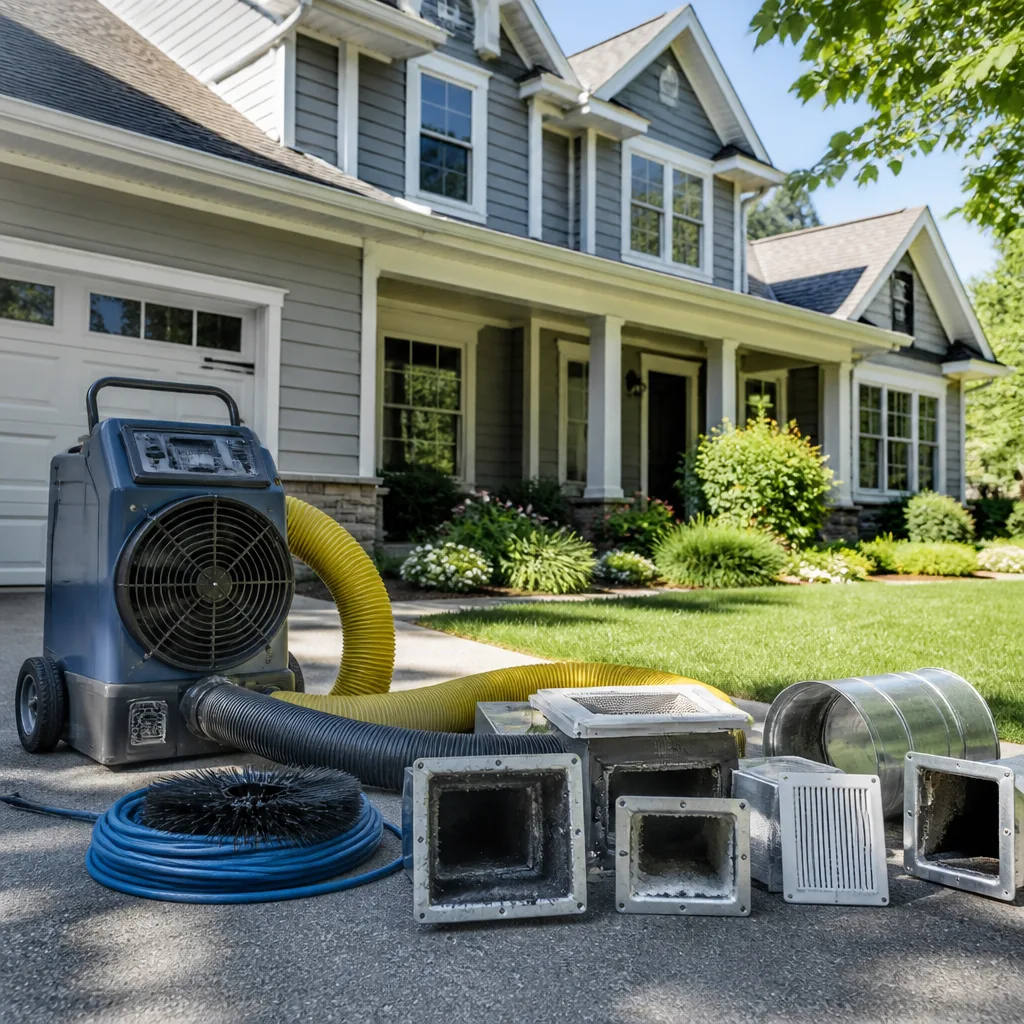 Whole-home duct cleaning
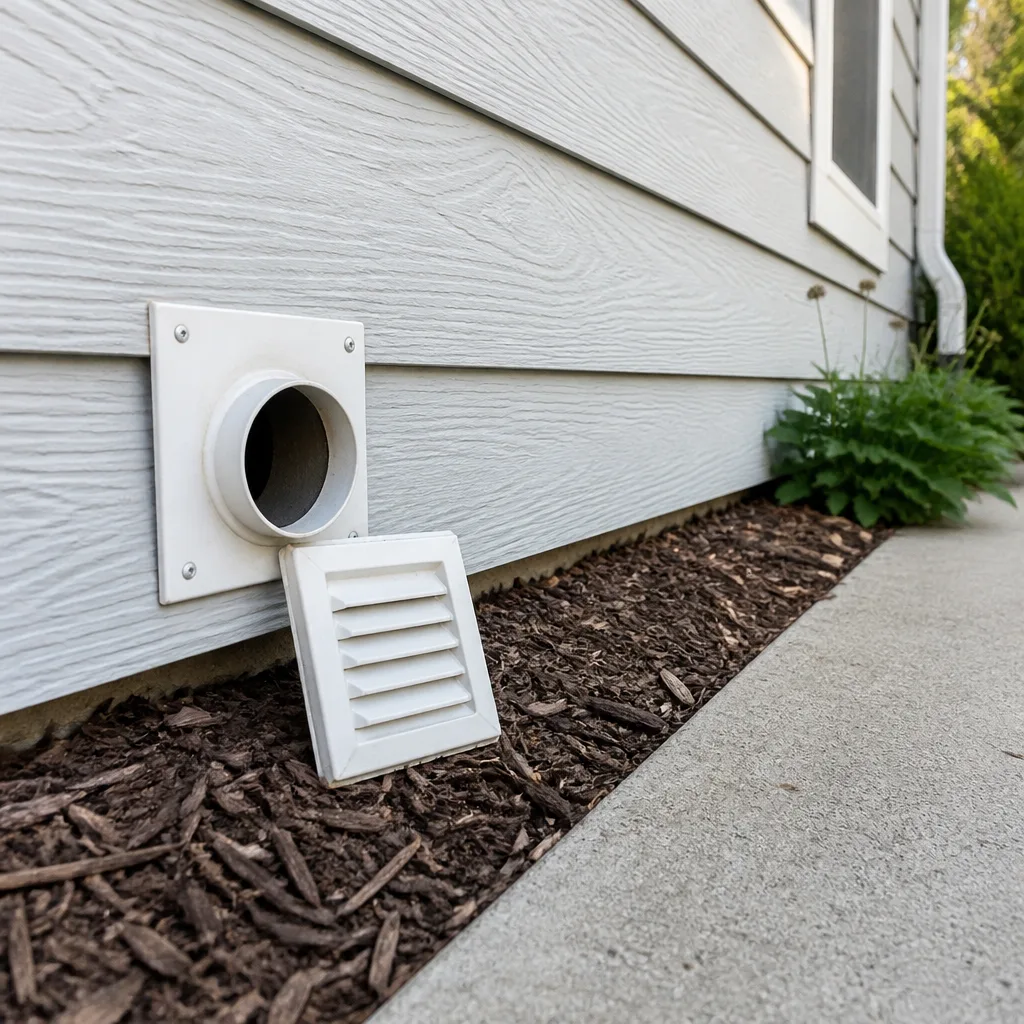 Dryer vent cleaning
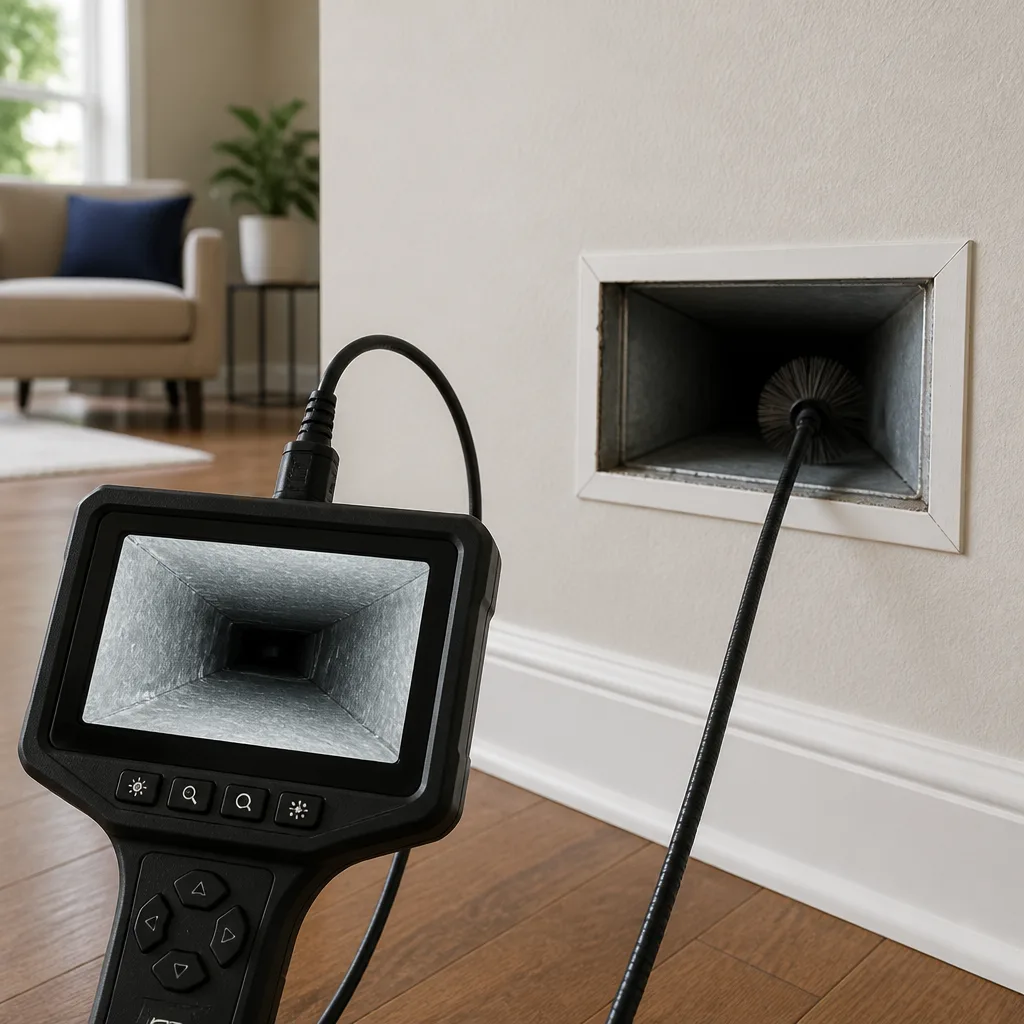 Camera inspection
 Sanitizing & deodorizing
Whole-system duct and dryer vent check with before-and-after photos - you see exactly what came out of your vents
That "$99 whole-house special" is a bait ad - the real number appears once they are in your hallway, or the "clean" is a shop-vac at the register. We photograph the inside of your ducts before and after instead.
The Complete Guide to Air Duct Cleaning in Amarillo
Most duct cleaning advice you’ll read online was written for a house in Houston or Dallas, where humidity and mild winters drive the conversation. Amarillo doesn’t work that way. We sit on the open Panhandle, one of the windiest stretches of the country, and every gust off the plains pushes fine caliche dust at your house. That dust doesn’t stay outside. It finds the seams, the loose joints, the gaps around poorly seated register boots, and it settles into the duct system until the whole thing starts recirculating it back into the air your family breathes. Amarillo averages more than 13 mph of wind a year, so the dust loading rate here runs faster than a national guide would have you expect. This guide maps the real process to those real conditions. You’ll learn how wind events load your ducts, how a source-removal cleaning differs from a blow-and-go, and how to read the proof that a job was done right.
Quick Answer
Air duct cleaning in Amarillo is a process of removing built-up dust, caliche particulate, and combustion byproducts from the inside of your duct system using negative-pressure vacuum equipment and mechanical agitation, not just wiping a register. Because Panhandle wind events drive fine dust into poorly sealed ducts faster than in calmer climates, an unsealed system here typically needs source-removal cleaning with a rotary brush and containment vacuum. A legitimate job starts with an inspection and ends with a verification report, and the price is set per system by a written estimate before any work begins.
Styles & brands we work with
- Whole-home duct cleaning
- Dryer vent cleaning
- Camera inspection
- Sanitizing & deodorizing
Table of Contents
- Why Amarillo Ducts Load So Fast
- How Haboobs and Red Dirt Storms Get Into Your Ducts
- Source-Removal Cleaning vs. Blow-and-Go
- Gas Furnaces and Combustion Byproducts
- What a Real Pre-Cleaning Inspection Includes
- The Cleaning Process, Step by Step
- How to Read a Verification Report
- When Cleaning Turns Into Repair
Why Amarillo Ducts Load So Fast
The dust challenge in Amarillo isn’t just volume. It’s what the dust is made of and how often it arrives. The soil across the High Plains is heavy with caliche, a calcium-carbonate hardpan that crumbles into an extremely fine, abrasive powder. When the wind picks it up, it behaves like talcum powder in the air and settles into anything with an opening. Your return-air grilles are, by design, the biggest opening in the house.
Add rapid temperature swings and the picture gets messier. A duct system expands and contracts as indoor air and outdoor temperatures move in opposite directions through the day. That movement works on every seam, tape joint, mastic bead, and takeoff collar in the system. A connection that was tight when the house was built can loosen just enough to let a thin stream of dust-laden air bypass the filter entirely. You won’t see it. But the inside of the plenum will show it as a dark streak of settled particulate around the joint.
In our experience, the Amarillo homes that load fastest share a few traits:
- Returns located low on a wall or in a hallway floor, where heavy dust settles first and gets pulled straight into the system
- Older flexible duct with taped joints that have dried and shrunk under the summer heat
- Filter grilles that get changed late, letting dust pass through and coat the plenum downstream
- Homes near open fields, new construction, or gravel work, where wind-borne particulate is heaviest
None of this makes Amarillo homes unusual in kind. It makes them unusual in pace. A system here can accumulate in a couple of seasons what a system in a calmer, greener climate takes years to build. That’s the reason duct cleaning in Amarillo should be scheduled based on what the system is actually holding, not on a generic national timeline printed on a coupon.
How Haboobs and Red Dirt Storms Get Into Your Ducts
A haboob or a Red Dirt storm turns the sky brown and coats every flat surface in town. Most people assume closing the windows protects the house. It helps, but it doesn’t seal it. A house is not airtight. Under the pressure of a strong wind event, air pushes against every gap in the building envelope: around windows, doors, attic penetrations, and the duct system itself. Any ductwork with a loose seam, a poorly seated boot, or a disconnected run becomes an entry path.
Here’s what that actually looks like inside the system after a major wind event. The return plenum, the large box that feeds the air handler, is usually the worst. Fine dust shows up as a uniform film on the walls, then a thicker layer where airflow slows at a bend or a transition. Takeoff collars, the short fittings where a branch run leaves the main trunk, will often show a ring of dust on the outside face that tells you air is escaping there. If a flex run was crushed, kinked, or disconnected at a collar, the dust concentration spikes at that point.
What you should check after a heavy wind event:
- Look at the return grille. Is there visible dust on the fins and frame, beyond normal? That dust is on its way into the system.
- Open the air handler access panel (with the power off) if it’s safely reachable and look at the blower wheel. A dust-caked wheel means particulate has already traveled through.
- Check for dust streaks on the outside of duct collars and seams in the attic or mechanical closet. Streaking means air, and dust, is bypassing there.
- Note any increase in dust settling on furniture and shelves after a storm. A system that’s recirculating is the usual culprit.
- Replace the filter after a major event. A loaded filter stops capturing and starts passing dust.
If you see streaking at the seams or a caked blower wheel, the dust isn’t just sitting in the ducts. It’s actively cycling back into the living space every time the system runs. That’s the point where cleaning moves from maintenance to a real fix.
Source-Removal Cleaning vs. Blow-and-Go
This is the single most important distinction in the whole guide, and it’s the one cheap quotes get wrong. There are two ways to “clean” a duct system. One actually removes the contamination. The other redistributes it.
Blow-and-go is what a low-cost coupon buys. A technician puts a blower or a shop-style vacuum at one end and blows air through the system, sometimes with a hand brush on a short line. The loose dust gets airborne, some of it exits the house, and a great deal of it simply settles in a different part of the duct, or gets pushed out into your rooms the next time the furnace runs. Registers may look cleaner at the end of the visit because a rag went over them. The duct interior hasn’t changed. In a dust-heavy place like Amarillo, blow-and-go can actually make things worse by loosening packed particulate that would otherwise have stayed put.
Source-removal cleaning is the professional method, and it’s what a rotary-brush-and-vacuum system like the Rotobrush is built for. The approach pairs two things that must work together:
- Negative pressure: a high-capacity vacuum and containment unit holds the whole duct system under suction so dislodged debris is pulled out and captured, not spread into the house.
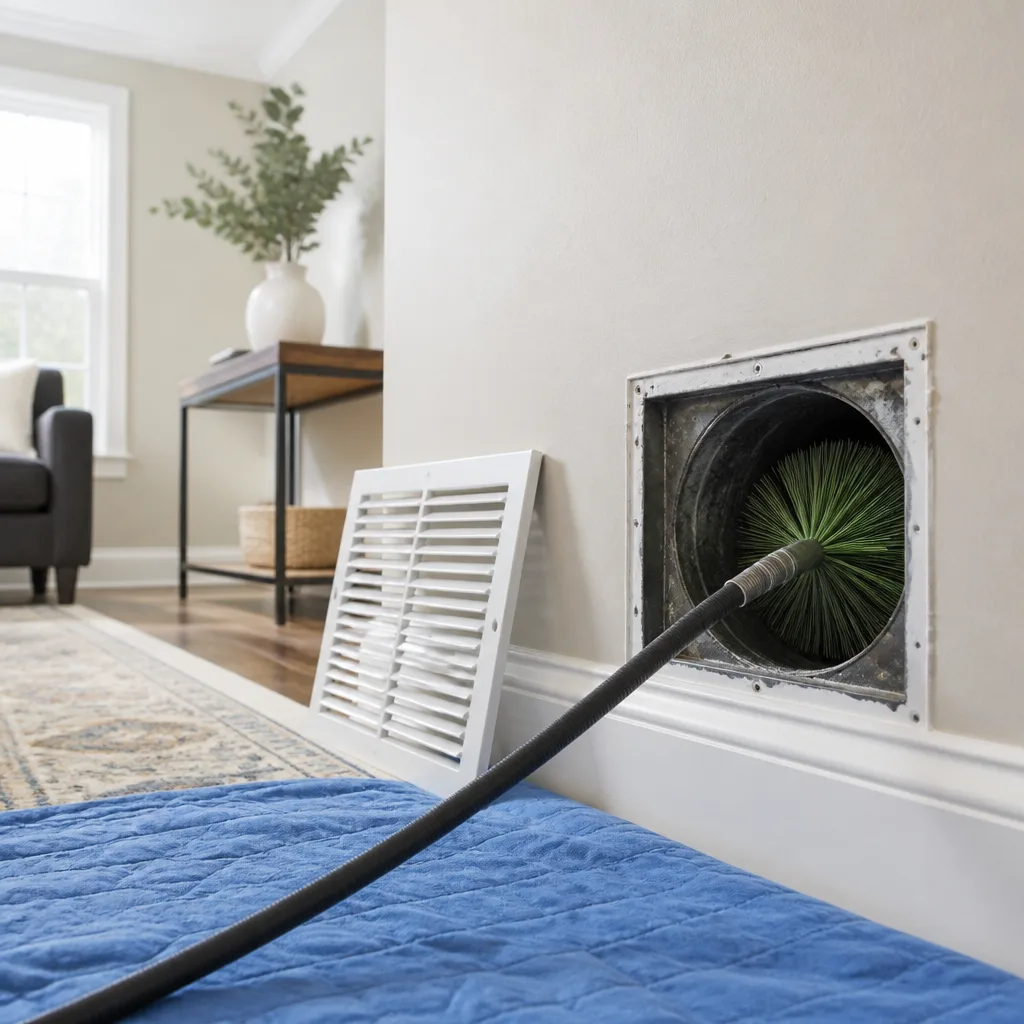
- Mechanical agitation: a rotating brush head is fed through the trunk and branch runs, scrubbing the duct walls and knocking loose the compacted film that air alone can’t move.
The vacuum alone won’t lift packed caliche dust off a duct wall. The brush alone just makes dust airborne. Both together, with the system under continuous containment, is source removal. Professional-grade equipment matters here because it’s built for the job, not the price point. Consumer-style vacuums and short brushes can’t sustain the suction or reach deep enough into a trunk line to do what the system actually needs. When we run a system, the containment and filtration tools we use include Abatement Technologies equipment for holding and filtering particulate, which matters in dust-heavy conditions where the volume of captured material runs high.
One practical way to tell the two apart before you hire: ask what happens to the debris. A source-removal contractor will talk about containment, filtration, and where the dust goes. A blow-and-go operator talks about the price.
Gas Furnaces and Combustion Byproducts
Most Amarillo homes heat with natural gas, and that changes the contamination profile in a way a guide written for an electric-heat market will completely miss. When a gas furnace runs, it produces combustion byproducts and heat. If the heat exchanger or the flue connection has any issue, soot and combustion particulate can migrate into the airstream or settle in the plenum and supply ducts. Even a well-running furnace leaves a fine, slightly oily soot film that dust clings to, and the film builds over years.
There’s a safety dimension here that deserves clear language. A heat exchanger that has cracked or failed can allow carbon monoxide into the air your ductwork distributes. Duct cleaning does not fix that, and no cleaning crew should suggest it does. What a careful cleaning can do is reveal the symptoms: soot streaks near the heat exchanger, a blower compartment that’s darkly stained, or a supply plenum with a soot film on top of the dust. When a technician sees any of that, the right move is to flag it and recommend an HVAC professional evaluate the furnace before the system runs again.
So cleaning and combustion safety are related but separate. Your furnace should be inspected for heat-exchanger integrity by a qualified HVAC professional, and cleaning should happen alongside that maintenance, not instead of it. The point is that in a gas-heat market, ductwork contamination isn’t purely a dust problem. Soot, combustion residue, and heat-exchanger byproducts are part of what a proper inspection should look for, and they’re part of why a real inspection comes before any cleaning begins. We can work with your HVAC professional to sequence the two so nothing gets skipped.
What a Real Pre-Cleaning Inspection Includes
No legitimate duct cleaning starts with a vacuum. It starts with a look, and the quality of that look separates a professional job from a sales call. If a contractor shows up and shines a flashlight into one register before quoting you, that isn’t an inspection. Here’s what a real one involves.
- Duct material identification. Is the system rigid galvanized steel, flex duct, duct board, or a mix? Each material needs a different brush and pressure approach. Flex duct, common in Amarillo attic runs, is easily damaged by aggressive agitation, so the technician needs to know what’s in the system before feeding a brush into it.
- Static pressure readings. A manometer measures the pressure difference across the system. High static pressure can indicate a restricted duct, an undersized return, or a clogged component, and it tells the technician how hard the system is working before cleaning.
- Camera confirmation. A borescope or inspection camera is fed into the trunk and branch runs so the technician can actually see the contamination. A flashlight glance at a register shows you the surface. A camera shows you the plenum and the run interiors where the real loading lives.
- Seam and joint assessment. The technician looks for the dust streaking and loose connections we described earlier, because those are the entry points that need addressing.
- Blower and coil check. A caked blower wheel or a dirty evaporator coil (where an AC system is present) is a sign that cleaning the ducts alone won’t be enough.
This inspection is also where air-duct repairs get identified. A disconnected or crushed flex run, a torn liner, or a separated joint found during inspection can be repaired in the same visit or scheduled as a follow-up. That repair capability is the part most duct-cleaning-only companies don’t have. A contractor that only cleans will clean around a problem it can’t fix. A full-service one inspects and repairs. This is also where our familiarity with air-quality hardware like Honeywell and Aprilaire controls and filters helps, because those products interact with the duct system and its airflow.
The Cleaning Process, Step by Step
Once the inspection is done and a written estimate sets the price per system, the cleaning itself follows a defined sequence. The steps matter because skipping any one of them turns source removal back into a partial job. Here’s how a full cleaning runs.
- Protect the interior. Floor coverings and furnishings around the work areas get protected before equipment comes in. Surface and material care is part of the job; we use Guardsman products for that protection because a cleaning visit shouldn’t leave marks on the house.
- Set up containment and negative pressure. The high-capacity vacuum and filter unit is connected to the system and holds it under suction. This is the step that captures everything the brush dislodges. Containment filtration, including Abatement Technologies equipment for heavier particulate loads, keeps the captured material out of the living space.
- Agitate the trunk and branches. The rotary brush is fed through each run, scrubbing the duct walls. Flexible runs get a gentler brush head and lower speed to avoid damage. The brush opens the packed film; the vacuum pulls it out.
- Clean the registers and boots. Grilles, diffusers, and boots are removed where possible and cleaned separately. Dust trapped at the boot is often the visible part a homeowner notices first.
- Clean the blower and accessible components. Where access allows, the blower wheel and accessible interior components are cleaned so the system isn’t pushing freshly cleaned air through a dirty fan.
- Repair what the cleaning exposed. Once the duct interior is clean, disconnected runs, torn flex, and separated seams are visible. Repairs are completed here, and the system is resealed.
- Verify and photograph. The technician confirms the result and documents it. That documentation is the subject of the next section.
A cleaning done this way takes real equipment and real time. A blow-and-go can be finished quickly because it skips most of these steps. That’s the reason quotes vary so widely, and the reason the lowest number is rarely the honest one.
How to Read a Verification Report
The proof that a duct cleaning actually happened is a post-cleaning verification report. If a contractor can’t provide one, that absence tells you something important: either the job wasn’t documented, or it wasn’t verified. Either way, you have no way to know what was done. A legitimate report includes:
- Before-and-after photos of your own ducts, not stock images. The camera goes into the trunk and a representative branch before cleaning and again after. The difference should be visible.
- The inner workings documentation, showing the components cleaned and any repairs made.
- The inspection findings, including the static pressure readings and any issues flagged, so there’s a record of the starting condition.
In our experience, the before-and-after photos of a customer’s own system are the most useful part, because they turn a verbal claim into something you can check. If the report shows a clean trunk but skips the branch runs or the plenum, ask about it. If it shows nothing at all, you didn’t get a documented cleaning. Read the report the same way you’d read a repair invoice: it should show what was done, where, and what was found.
When Cleaning Turns Into Repair
Cleaning and repair are separate services, and it’s worth understanding when one becomes the other. A cleaning crew that only cleans will hit problems it can’t address, and a homeowner can end up with a cleaned system that’s still leaking dust through a disconnected run. Structural problems a proper inspection commonly turns up include:
- Crushed or kinked flexible duct in an attic run, which restricts airflow and collects debris at the pinch point
- Disconnected or separated joints at takeoff collars, which let dust-laden attic air into the supply side
- Torn or failing internal liner on duct board or lined metal, where the lining surface breaks down
- Duct runs that were never properly sealed at installation, common in older Amarillo homes
These are fixable, and fixing them matters because a clean system with an open seam will re-load faster. If repairs are needed beyond the cleaning, the written estimate should set the price for that work before it starts. Air-duct repair as a service exists exactly for this: the inspection finds the problem, and the same visit or a follow-up fixes it.
One related note. If you’re also concerned about the fire risk sitting in your laundry area, the dryer vent cleaning service is a separate fire-safety job, not a bundle. It addresses lint accumulation that can ignite, which is one of the leading causes of residential house fires and something most duct guides never mention. If your return air is pulling from a laundry room, the same dust dynamics we’ve covered in this guide also apply to the dryer vent.
Common Mistakes to Avoid
- Booking strictly on price. A coupon figure that looks far lower than everything else usually means a blow-and-go, not source removal. Ask what equipment will be used and whether the system will be under containment vacuum before accepting any quote.
- Skipping the inspection entirely. A cleaning without a pre-inspection camera check and static pressure reading is a guess. You can’t clean a system you haven’t looked at, and in dusty Amarillo you especially need to see the plenum.
- Assuming a clean house means clean ducts. The dust that matters is inside the system, not on the furniture. Dust settling faster than usual after a wind event is a better signal than how the house looks day to day.
- Waiting on flexible duct that’s already damaged. Flex runs damaged by heat, kinking, or long-term wind loading can stay hidden until a cleaning exposes them. If you notice airflow that’s weak at one register and strong at another, get it inspected.
- Forgetting the dryer vent while you’re at it. Laundry-room lint is a separate fire hazard from duct dust, but both build up from the same air movement. If the apartment or house has a dryer, get the vent on the same schedule.
- Changing the filter and calling it done. A filter change helps, but a system that’s already loaded won’t clean itself. Filter changes prevent; they don’t reverse existing contamination.
- Letting a cleaning crew clean around an obvious defect. If a run is disconnected, clean the system and fix the run, or the system will just re-load through the opening.
See the difference
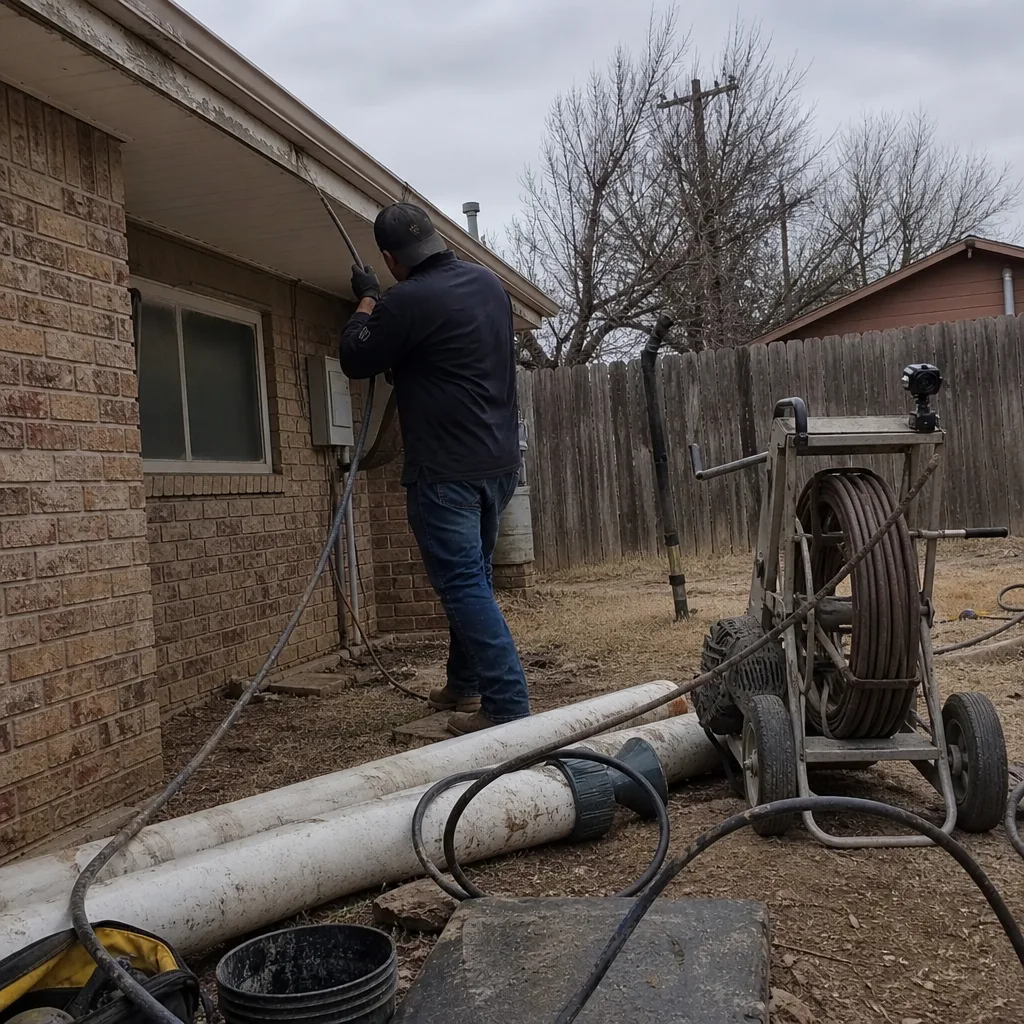 Before
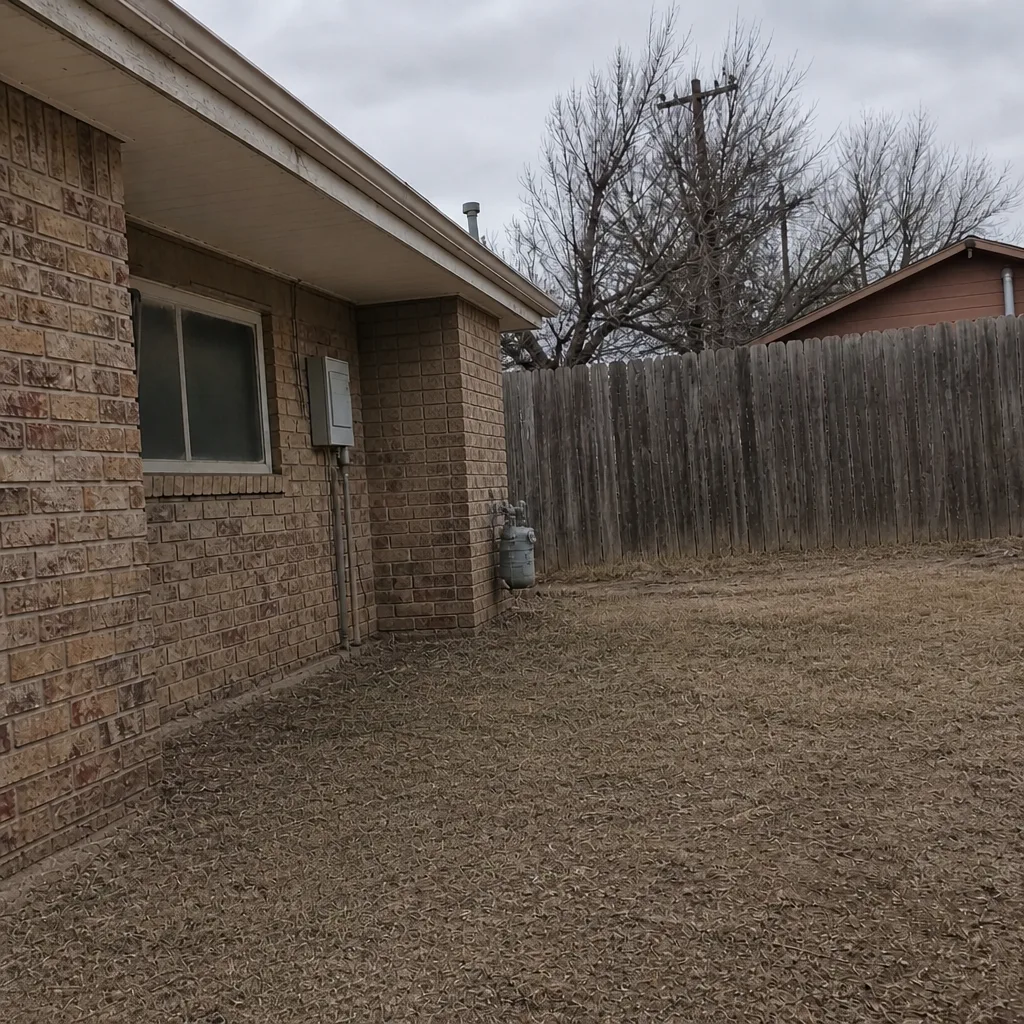 After
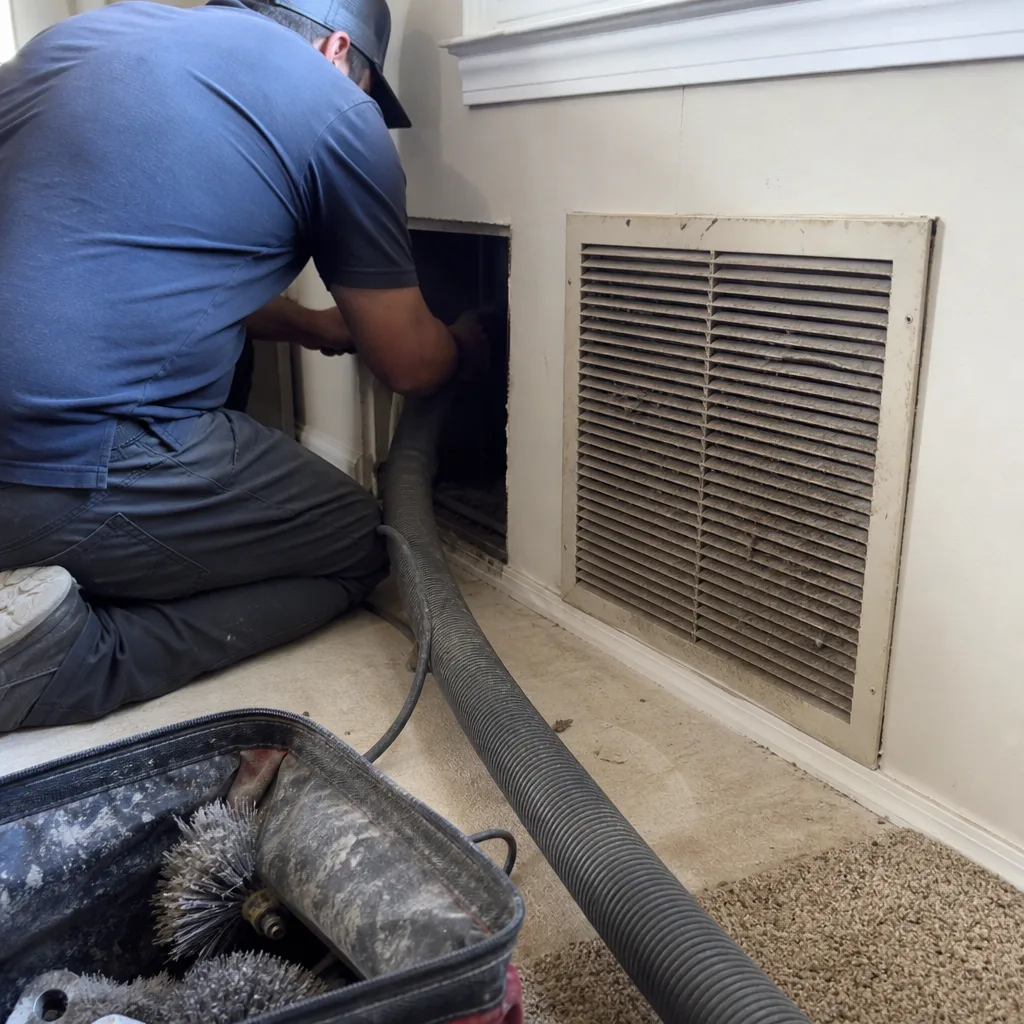 Before
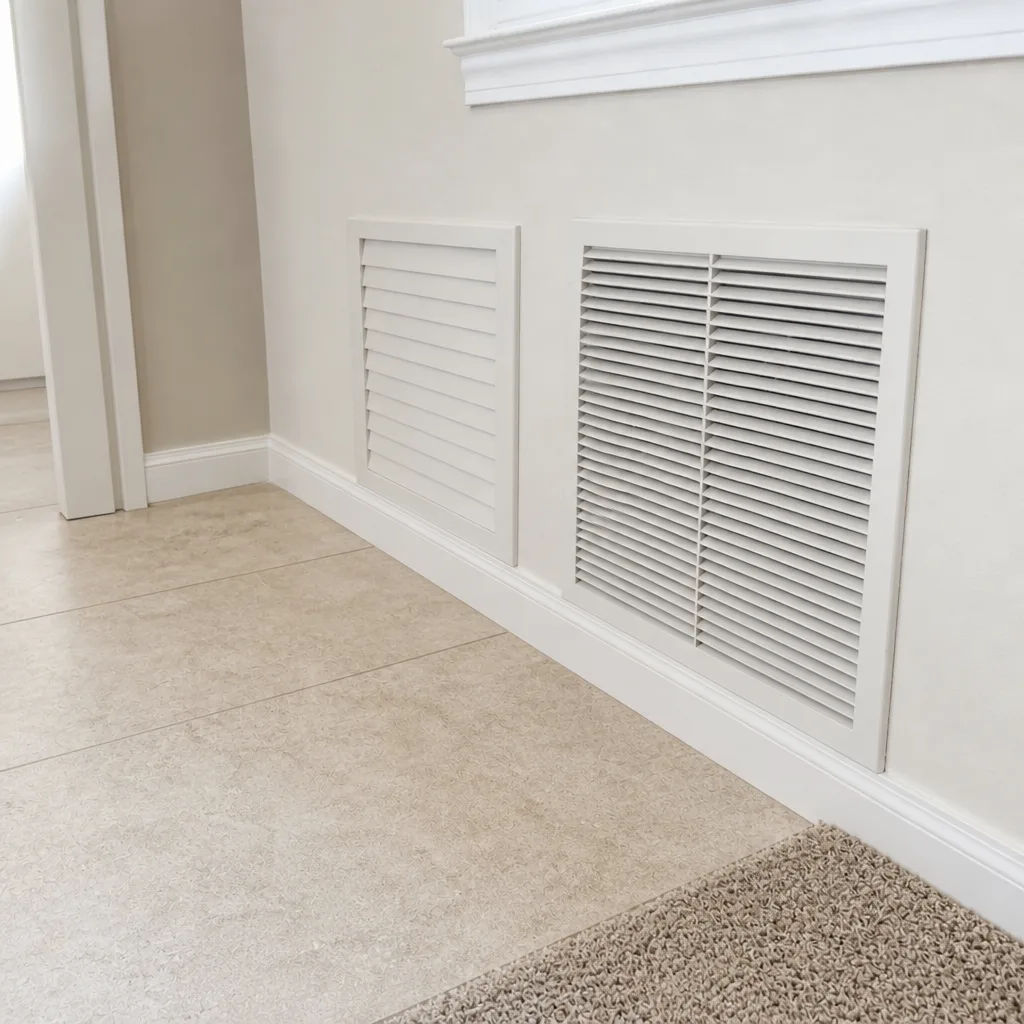 After
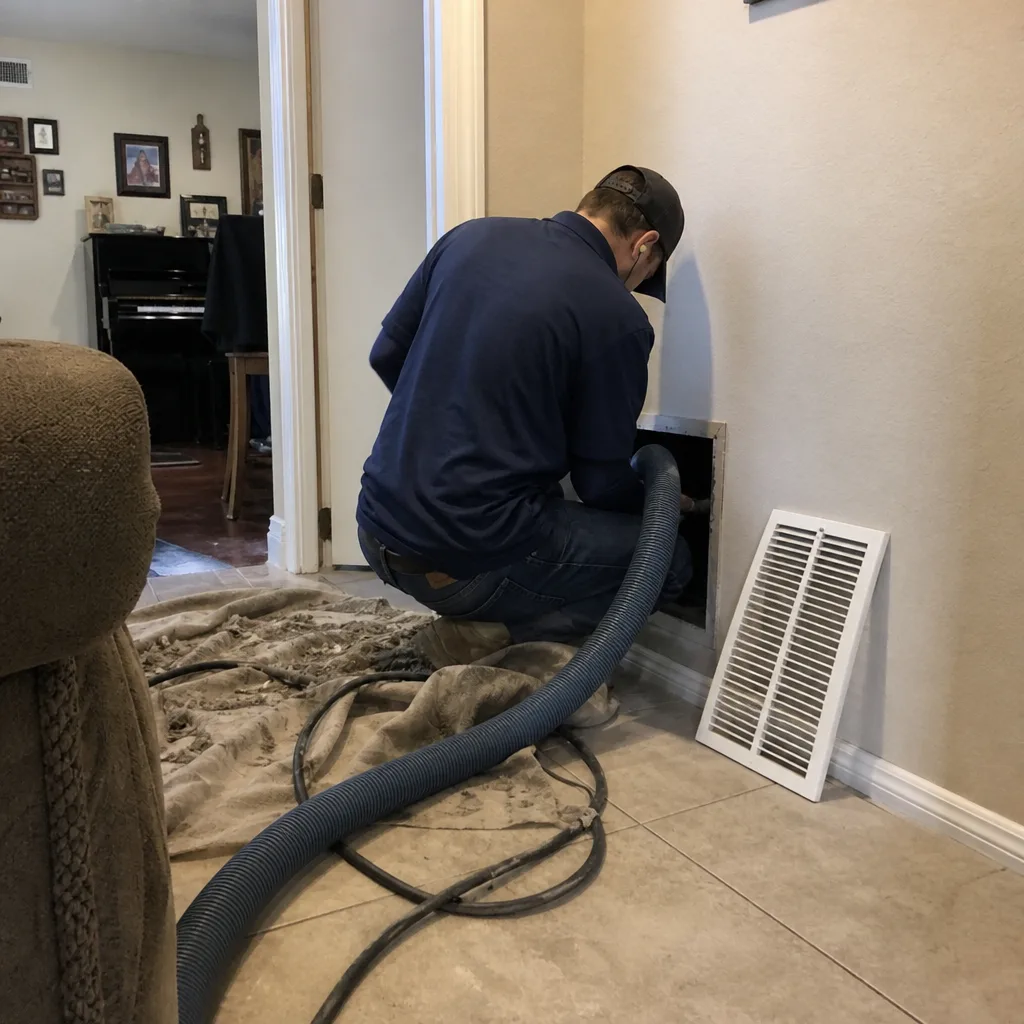 Before
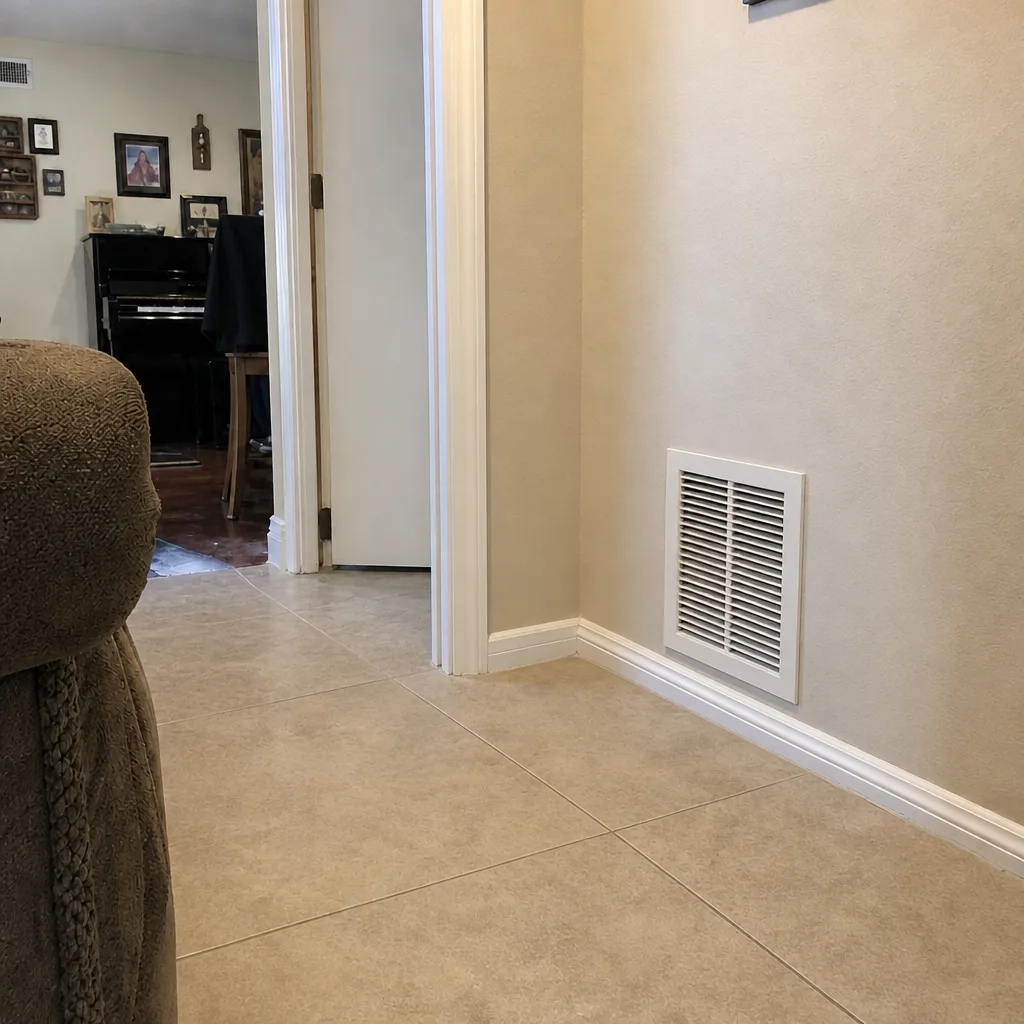 After
When to Call a Professional
Some ductwork needs a real cleaning, not a filter swap. Call a professional when you see visible dust streaking on duct joints or collars, when a return grille is noticeably coated after a wind event, or when you notice dust settling faster indoors than it should. If the furnace is a gas unit and you’ve seen soot near the heat exchanger or a darkened blower compartment, that’s also a reason to get a proper inspection, alongside an HVAC check for combustion safety. If you’ve just finished a renovation in an Amarillo home, drywall dust travels and settles in the system, and a cleaning afterward keeps it from recirculating. If the dryer vent hasn’t been looked at in a while, that’s its own separate reason to call. Duct Cleaning Amarillo offers free estimates in Amarillo. Call (866) 389-4505.
Frequently Asked Questions
Pricing is set per system by a written estimate, not per vent, and the estimate is free. Cost depends on the size and layout of the system, the duct material, the level of contamination, and whether repairs turn up during inspection. We give you one flat price for the system before any work starts, so there are no surprise add-ons after the equipment is running. Call (866) 389-4505 for an exact quote.
There’s no single national number that fits this climate. Wind events, caliche dust, and gas-furnace contamination push the loading rate higher than calm, humid regions, so systems here often need attention more frequently. The honest answer is to inspect and measure the system rather than guess. A camera inspection and static pressure reading tell you what the system actually holds, and that’s what determines the schedule. Call (866) 389-4505 to have your system checked.
Lower quotes usually buy a blow-and-go service, which redistributes dust instead of removing it. A source-removal cleaning uses a rotary brush and high-capacity containment vacuum, professional equipment built for the job, and a documented inspection process. That scope costs more to do properly because it involves more time and more capable equipment. The lowest price in a dust-heavy market is rarely the honest one. Call (866) 389-4505 for a quote that reflects a full source-removal cleaning.
You get a verification report with before-and-after photos of your own ducts, not stock images. It documents the components cleaned, the repairs made, and the inspection findings. If a contractor can’t show you documented evidence of what happened inside your system, treat that as a reason to keep looking. Call (866) 389-4505 to see our process and what gets covered.
Removing the dust and particulate that a system recirculates reduces what’s being distributed into the air, which matters most for anyone sensitive to dust. It doesn’t replace medical advice, and it doesn’t fix an HVAC defect that’s introducing combustion byproducts, so furnace safety checks stay separate. The cleaning addresses the source inside the ducts. Because we work with Honeywell and Aprilaire controls and filtration, we can also talk through whole-home air-quality options after the cleaning. Call (866) 389-4505 to schedule an inspection.
Yes, as a separate fire-safety service. Dryer lint accumulation is a fire risk that builds up independently of the ductwork, and it’s one of the leading causes of residential house fires. It’s not a bundle or an upsell; it’s a different job with a different hazard. If the dryer vent hasn’t been cleaned in a while, get it on the schedule alongside the air duct cleaning. Call (866) 389-4505 to book both.
The Bottom Line
Amarillo’s wind, caliche dust, and gas-furnace heating load duct systems faster than national guides assume, which means the generic advice you’ll find online barely fits a home here. The right approach starts with a real inspection: identifying the duct material, reading static pressure, and confirming contamination with a camera. From there, source-removal cleaning with a rotary brush and containment vacuum is what actually removes the debris, rather than a blow-and-go that moves it around. Repair capability matters because a clean system with a disconnected run will just re-load. And proof matters most of all: before-and-after photos of your own ducts and a written estimate that sets the price before work begins. If you’re ready to have your system looked at properly, the team at Amarillo‘s duct specialist can help.
Whether you’re dealing with a dusty Panhandle home or a gas furnace that needs a cleaning alongside its safety check, the goal is the same: a system that holds its air, captions its dust, and gives you a documented result you can verify. Our technicians have up to 9 years of experience working with professional-grade equipment from Rotobrush, Nikro, and Abatement Technologies. Free estimates, one flat price per system agreed before work starts, and before-and-after photos of your own ducts. Call Duct Cleaning Amarillo at (866) 389-4505. We answer 24/7. Fast dispatch from 7am to 7pm, Sunday through Friday.
Written by the team at Duct Cleaning Amarillo.