
Last updated November 15, 2026
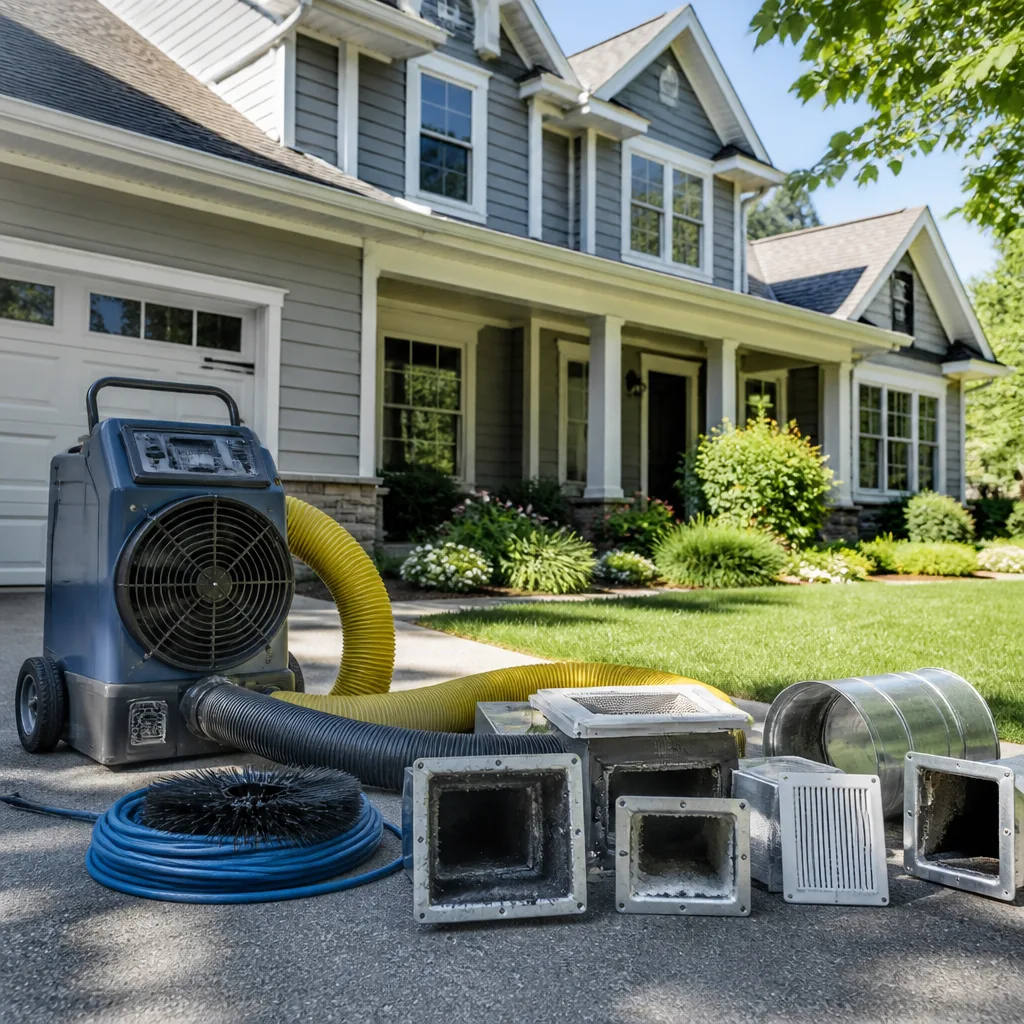 Whole-home duct cleaning
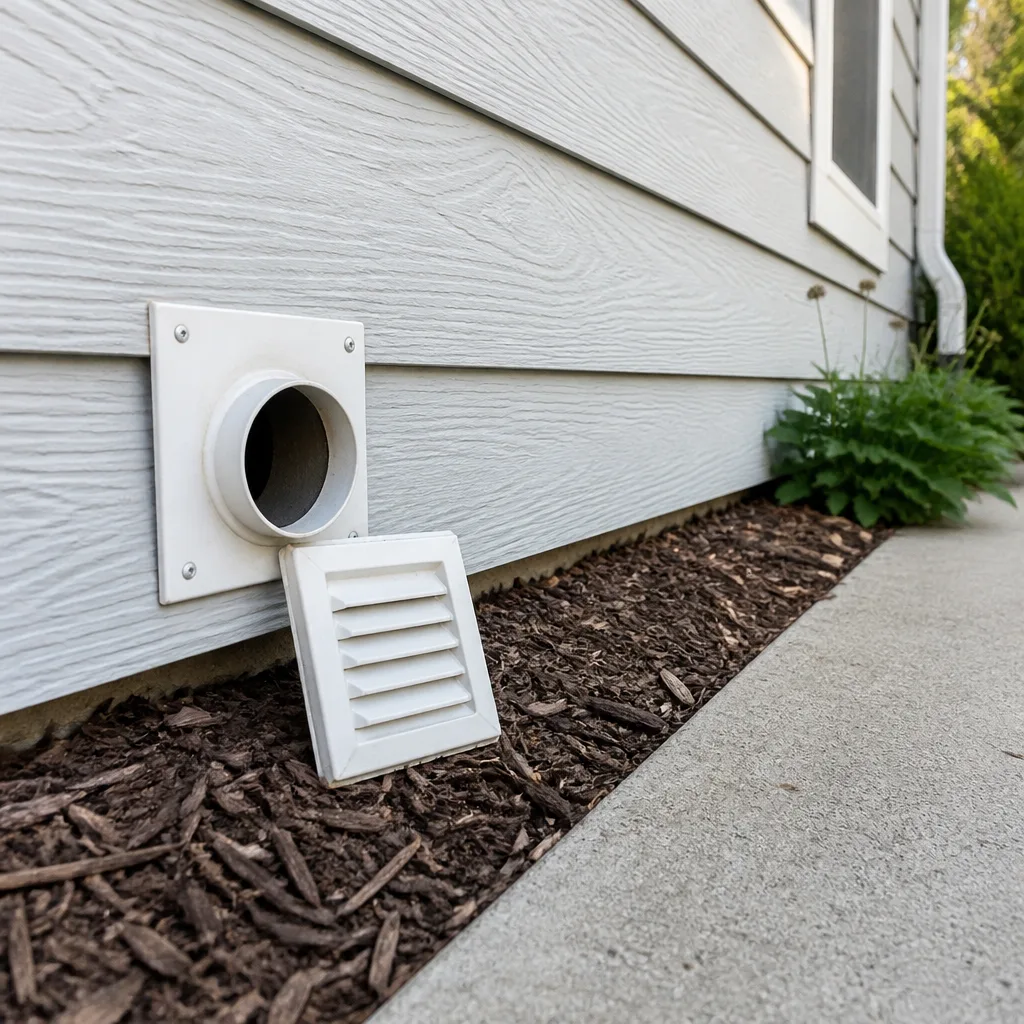 Dryer vent cleaning
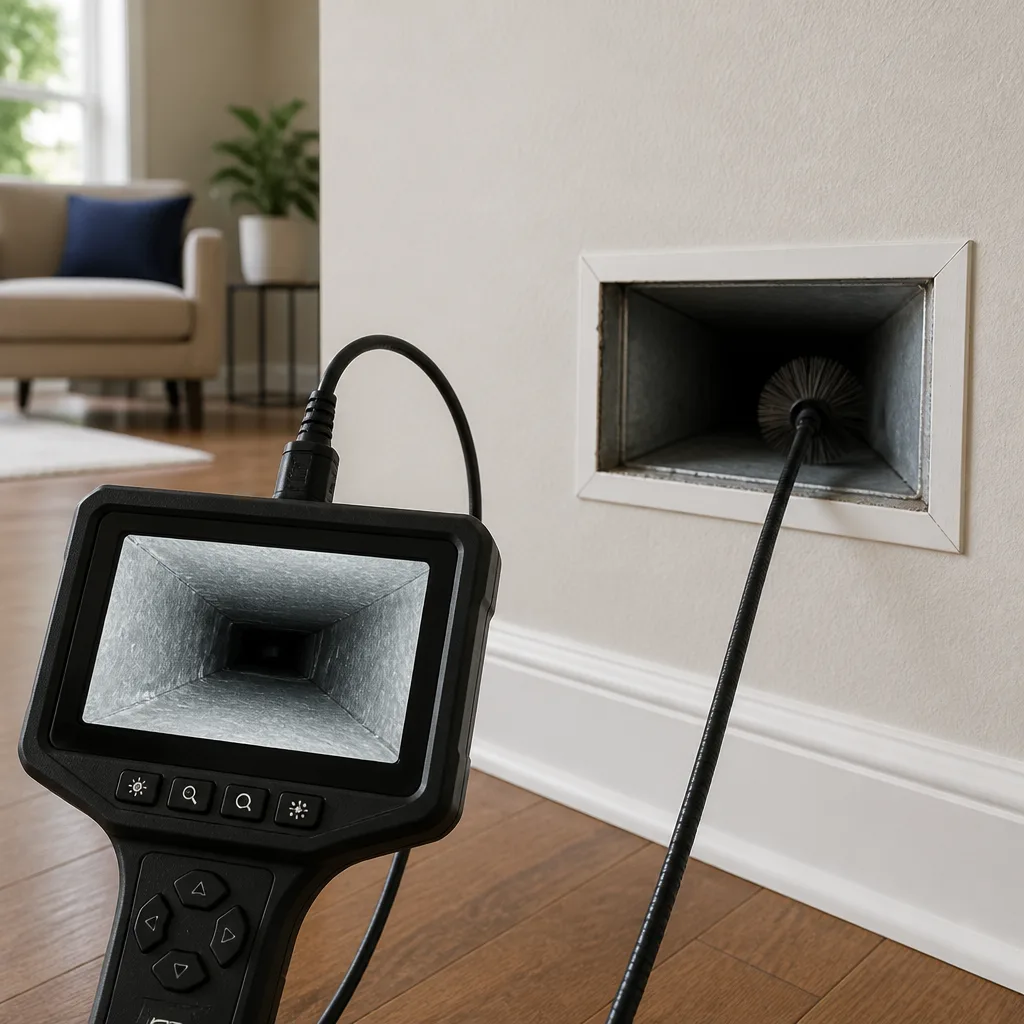 Camera inspection
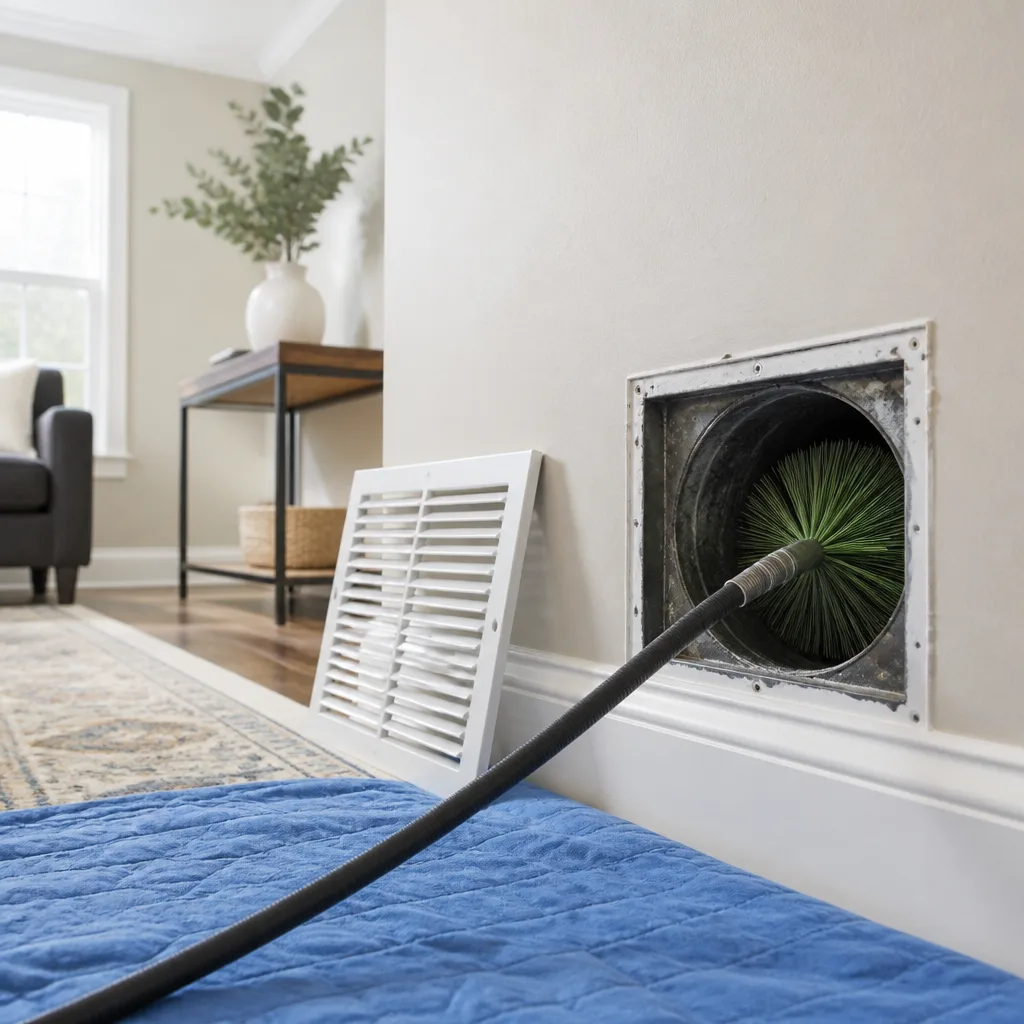 Sanitizing & deodorizing
Whole-system duct and dryer vent check with before-and-after photos - you see exactly what came out of your vents
That "$99 whole-house special" is a bait ad - the real number appears once they are in your hallway, or the "clean" is a shop-vac at the register. We photograph the inside of your ducts before and after instead.
DIY vs Professional Air Duct Cleaning: The Amarillo Homeowner’s Decision Guide
Here’s the part most duct cleaning articles get wrong: the danger isn’t that a homeowner with a shop vac will hurt themselves. It’s that the work will look done and won’t be. A good wet/dry vac and a dryer vent brush can legitimately clean the first 18 inches of a supply run, and that first stretch of duct is often the only part anyone ever sees. The contamination that actually restricts airflow usually sits 4 to 8 feet in, past the reach of any consumer tool. This guide explains what you can honestly accomplish in an Amarillo home, where DIY stops working, and how to decide which side of the line your house falls on.
Quick Answer
DIY air duct cleaning is reasonable for surface-level upkeep: register cleaning, return grille washing, filter upgrades, and dryer vent lint removal you can physically reach. It is not adequate for removing the settled debris deep inside supply and return runs, because consumer vacuums can’t hold the sustained negative pressure that keeps loosened dust contained. If your ducts haven’t been cleaned in years, you’ve had renovation work, or you suspect moisture, mold, or pest activity, professional equipment and a documented before-and-after are the only approach that verifiably removes the contamination.
Styles & brands we work with
- Whole-home duct cleaning
- Dryer vent cleaning
- Camera inspection
- Sanitizing & deodorizing
Table of Contents
- What You Can Actually Reach From the Register
- The Physics Problem: Why Deep Cleaning Needs Negative Pressure
- What a Homeowner Can Legitimately Do (With the Right Tools)
- How to Inspect Your Own Ducts Before Spending a Dime
- Four Scenarios Where Professional Equipment Is Not Optional
- The Risk Calculus for Older Amarillo Housing Stock
- What Professional Cleaning Costs and How It’s Priced
- Common Mistakes to Avoid
What You Can Actually Reach From the Register
Pull a supply register in most any Amarillo home and you’ll see a galvanized boot, a short stretch of round pipe, and then a dark turn. The visible section is the part you stand a fighting chance of reaching. It’s also the part that gets the most air movement, so it tends to stay cleaner than the ductwork behind it. The dust, drywall grit, pet hair, and construction debris that falls out of the airstream collects along horizontal runs and inside the plenum at the air handler, exactly where no consumer tool can go.
This isn’t a knock on homeowners. It’s just geometry. A shop vac hose can travel maybe three or four feet down a straight run before friction and the flat, rectangular shape of typical sheet metal ductwork stop it cold. You can’t turn a corner inside a trunk line. You can’t spin a brush inside a flex duct. And you can’t reach the return plenum without cutting into the system, which is a job for someone with the right equipment and a plan for sealing it back up.
What you can reach from the register matters for the other daily functions of a home: dust control, filter life, and, in Amarillo’s dry, windy environment, the sheer volume of fine particulate that finds its way into return lines. That’s real work, worth doing. It’s also a floor, not a ceiling.
The Physics Problem: Why Deep Cleaning Needs Negative Pressure
Professional duct cleaning isn’t a more powerful shop vac. It’s a whole different mechanical system built around sustained negative pressure. A truck-mounted or high-capacity portable vacuum pulls a continuous column of air through the duct system, typically generating hundreds to over a thousand cubic feet per minute of airflow depending on the equipment. A consumer vacuum pulls maybe 100 to 200 CFM at best, and drops sharply as soon as the filter loads up.
Why does that flow rate gap matter so much? Because the debris deep in your ducts isn’t loose. It’s adhered to the metal by moisture, static, and time. To dislodge it you need mechanical agitation (a rotary brush or pneumatic whip spinning inside the duct) plus enough simultaneous vacuum to capture the material the moment it breaks free. If the agitation outruns the vacuum, dislodged debris drifts back into the system, cascades into the living space through registers, or settles into a different horizontal run. In other words, a weak clean can make the problem worse.
This is where the equipment names matter:
- Rotobrush rotary brush systems are built to drive a rotating brush head through the duct while simultaneously collecting debris, with the brush calibrated to the duct material so it cleans flex duct without shredding it.
- Nikro high-capacity vacuums and negative-air equipment supply the sustained CFM that pulls dislodged material back into containment rather than into your living room.
- Abatement Technologies filtration and containment tools handle the higher-particulate scenarios: post-renovation dust, heavy mold suspicion, or any job where what’s in the ducts shouldn’t be allowed to circulate while the work is happening.
That stack is what separates a real duct cleaning from a coupon service. Built for the job, not the price point, as the saying goes.
What a Homeowner Can Legitimately Do (With the Right Tools)
You don’t need permission to maintain the accessible parts of your system. These tasks are worth doing in any Amarillo home, and done consistently they cut down on the dust load that pushes into the ductwork in the first place.
- Clean the supply and return registers. Remove the grilles (usually two screws or a friction clip), wash them in the sink with dish soap, dry fully, and reinstall. Do this a couple times a year. Drywall dust and pet hair on the grille is a quarter-inch filter you didn’t intend to add.
- Wipe the register boots. Reach into the visible boot with a damp cloth and pull out what you can. Firmly, not aggressively, so you don’t dislodge the sealant around the boot-to-drywall joint.
- Upgrade your filter. Match the filter to your system, not to the highest number on the box. A MERV 11 to MERV 13 pleated filter is a fair middle ground for most residential systems; pushing to the highest MERV rating available can starve airflow on older units. Honeywell and Aprilaire make quality filter media and whole-home air quality solutions worth asking an HVAC professional about.
- Clean the dryer vent yourself with a dedicated kit. A dryer vent brush on a flexible rod plus a lint trap vacuum attachment is one of the most useful $20 you’ll spend. Do it every few months. More on this below.
- Dust and vacuum the return path regularly. The return grille pulls in more of the room’s daily dust than you’d guess. A HEPA vacuum around the register on a regular schedule lightens the load.
Protecting surrounding surfaces while you work matters too. Drop cloths over flooring and furniture near each register, tape edges where drywall dust can fall, and keep the shop vac’s exhaust pointed away from the room. Guardsman surface protectants are worth knowing about for woodwork and finishes near the work area.
How to Inspect Your Own Ducts Before Spending a Dime
Before you schedule anyone, take 15 minutes and look. A phone camera on a selfie stick will give you a usable picture of what’s inside the first couple feet of any register, and that’s often enough to decide whether the call is worth making.
- Choose one supply and one return, and pull the register. Pick a supply in a bedroom or living area and a return grille, not just the one in the hallway everyone sees.
- Attach your phone or a small flashlight to a selfie stick. Turn on the flashlight and take a burst of photos as you slide the stick in. Ten photos from different depths will tell you more than one blurry shot.
- Look for these signs. Visible matted dust or hair lining the duct walls, dark staining (moisture), pest droppings or insect casings, construction debris (drywall chunks, sawdust), or anything that looks like insulation fiber coming apart.
- Check the filter and blower area. If your filter is loading up in a matter of weeks, or the return plenum is visibly coated, the problem is downstream of the filter and DIY register cleaning won’t solve it.
- Compare the two registers. If the return is dirtier than the supply by a wide margin, that’s normal. If either is unexpectedly heavy for the home’s age, take note.
This is where the money decision happens. If your photos come back mostly clean metal and light dust, your maintenance routine is working and you don’t need a cleaning. If they show matted debris, streaking, or anything growing, you do. That’s a rational decision made with data, not fear.
Four Scenarios Where Professional Equipment Is Not Optional
There’s a category of jobs where DIY isn’t a shortcut but a risk. In these cases, the combination of rotary brush agitation and sustained vacuum capture plus containment is the difference between cleaning the system and redistributing the problem. Professional air duct cleaning becomes the only sane option in these scenarios:
- Post-renovation cleaning. Drywall dust is fine, alkaline, and aggressively clings to duct walls. It also settles into horizontal runs and the air handler where no consumer tool reaches. After any meaningful renovation, a professional cleaning with Abatement Technologies containment is the standard approach.
- Suspected mold or moisture. If the DIY inspection shows dark staining, musty odor, or visible growth, don’t touch it. Agitating moldy duct liner with a brush can aerosolize spores across the entire house. A professional assesses whether the duct can be cleaned or must be replaced, and often brings filtration containment for the work. (Note: our scope is cleaning and duct repair, not mold remediation; we’ll tell you if remediation is the right call.)
- Vermin activity. Rodent droppings, nesting material, or insect casings inside ductwork should never be shop-vac cleaned. Hantavirus and other pathogens survive vacuum exhaust. This is a contained-cleaning job.
- Post-storm infiltration. Amarillo’s spring dust storms and wind events push fine particulate deep into return systems. When a storm has driven visible dust through your registers, what’s settled in the ducts exceeds what consumer equipment can lift.
In all four cases, the underlying reason is the same: the job requires source removal with sustained negative pressure, not a wipe-down of the visible parts.
The Risk Calculus for Older Amarillo Housing Stock
Amarillo has a meaningful share of homes built before 1980, and that matters for duct work. In homes of that era, duct insulation and duct board may contain asbestos. Asbestos-containing material is generally considered safe when it’s intact and undisturbed. It becomes a hazard when it’s disturbed: cut, scraped, drilled, or vigorously brushed.
This is where DIY duct cleaning goes from “limited” to “actually risky.” A homeowner sliding a brush into a duct lined with aging insulation can’t tell by feel whether they’re abrading asbestos-containing material. The result isn’t a cleaning problem, it’s a hazmat problem, and the cost of proper abatement is orders of magnitude more than a professional cleaning would have been. If your home was built before 1980 and you don’t know what your duct insulation is made of, don’t brush, scrub, or vacuum aggressively inside the ductwork. Have it assessed. That’s the rational move.
Even in newer homes, older duct systems accumulate problems the homeowner can’t see: disconnected joints, crushed flex duct behind a knee wall, torn liner, or leaks at the plenum. Cleaning without repair just re-dirties the system. This is why we offer air duct repair as a distinct service; we inspect what we clean, and we fix what’s broken rather than vacuuming around it. Duct cleaning and repair should always travel together. For the cleaning side specifically, see our page on air duct cleaning.
And a separate but related safety note: your dryer vent is a fire risk, not a maintenance checkbox. Lint accumulation in a dryer vent is one of the leading causes of residential house fires, and consumer dryer vent brushes have real limits past the first bend or two. We treat dryer vent cleaning as a dedicated fire-safety service, not a bundled afterthought, and we inspect for crushed or disconnected vent runs where lint hides.
What Professional Cleaning Costs and How It’s Priced
Pricing for duct cleaning in Amarillo varies widely, and that variability is exactly what makes the cheap coupon market so confusing. Here’s the honest framing: a real cleaning is priced per system, not per vent, and the flat price should be agreed before any work starts. A written estimate sets the final number. The estimate is free.
Typical estimates for residential duct cleaning in Amarillo homes generally land in the range of a few hundred dollars for a standard single-system home, with the figure moving up for larger homes, multiple systems, or jobs that include repair. The exact number depends on your layout, the number of systems, the condition of the ducts, and whether repair is needed. What you should not see is a teaser number over the phone that turns into a much larger invoice once the technician is on site.
A few rules for reading a quote:
- One flat price per system, agreed before work starts. Not per vent, not per register, not per foot.
- Filter, assembly, and reassembly included. Every register comes off and goes back on; every filter door is opened and closed.
- Before-and-after photos of your own ducts, not stock images. You have a right to see what was actually removed.
- Repair quoted separately, so you can decide whether to proceed. We inspect and repair as part of a job, but a repair quote should never appear mid-clean as a surprise.
To get an exact number for your home, call us. We’ll walk the system, look at the same things you can, and give you a written estimate before anything happens.
Common Mistakes to Avoid
- Judging the job by the debris that comes out of the visible register. That material is the easiest 18 inches to collect and tells you almost nothing about the horizontal runs. Ask to see the before-and-after photos of the trunk line, not the register boot.
- Brushing inside pre-1980 ductwork without knowing what the liner is made of. In Amarillo homes of that era, disturbed asbestos-containing insulation turns a maintenance job into a hazmat project. Assess before you agitate.
- Trusting a coupon price that isn’t a real price. If the number on the flier is dramatically lower than every other quote, the technician is almost certainly going to find something that changes the invoice. Insist on a flat per-system price in writing.
- Using a shop vac on vermin-contaminated ducts. Rodent droppings and insect casings should never pass through a consumer vacuum’s exhaust. Contained professional cleaning is the only safe approach.
- Skipping the dryer vent because it “looks fine.” Lint collects past the first bend where you can’t see it. That’s the section that matters.
- Ignoring the return. Everyone looks at supply registers. The return grille and return plenum carry most of the dust load, and they’re exactly what gets skipped in a DIY pass.
- Cleaning when the ducts need repair. Vacuuming a torn liner or a disconnected flex run just re-contaminates the system within weeks. Inspect first, fix what’s broken, then clean.
See the difference
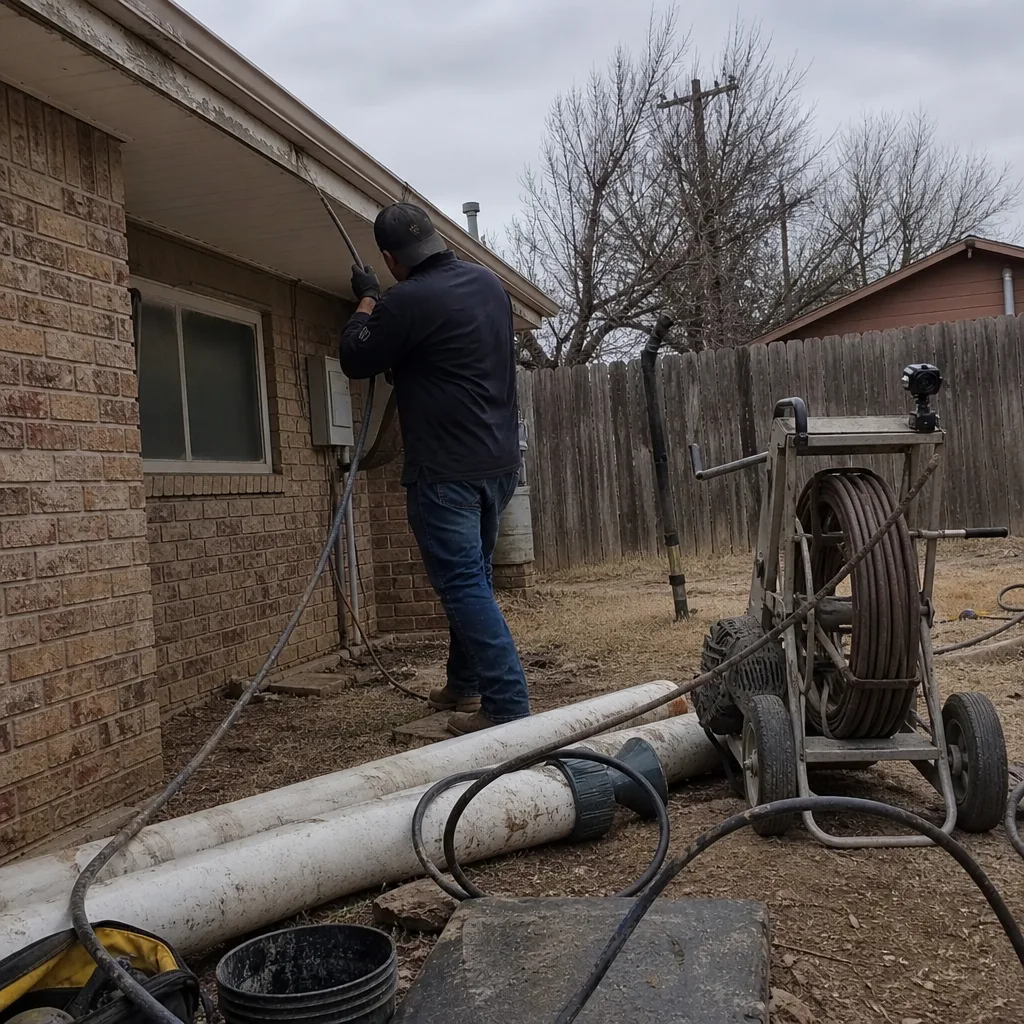 Before
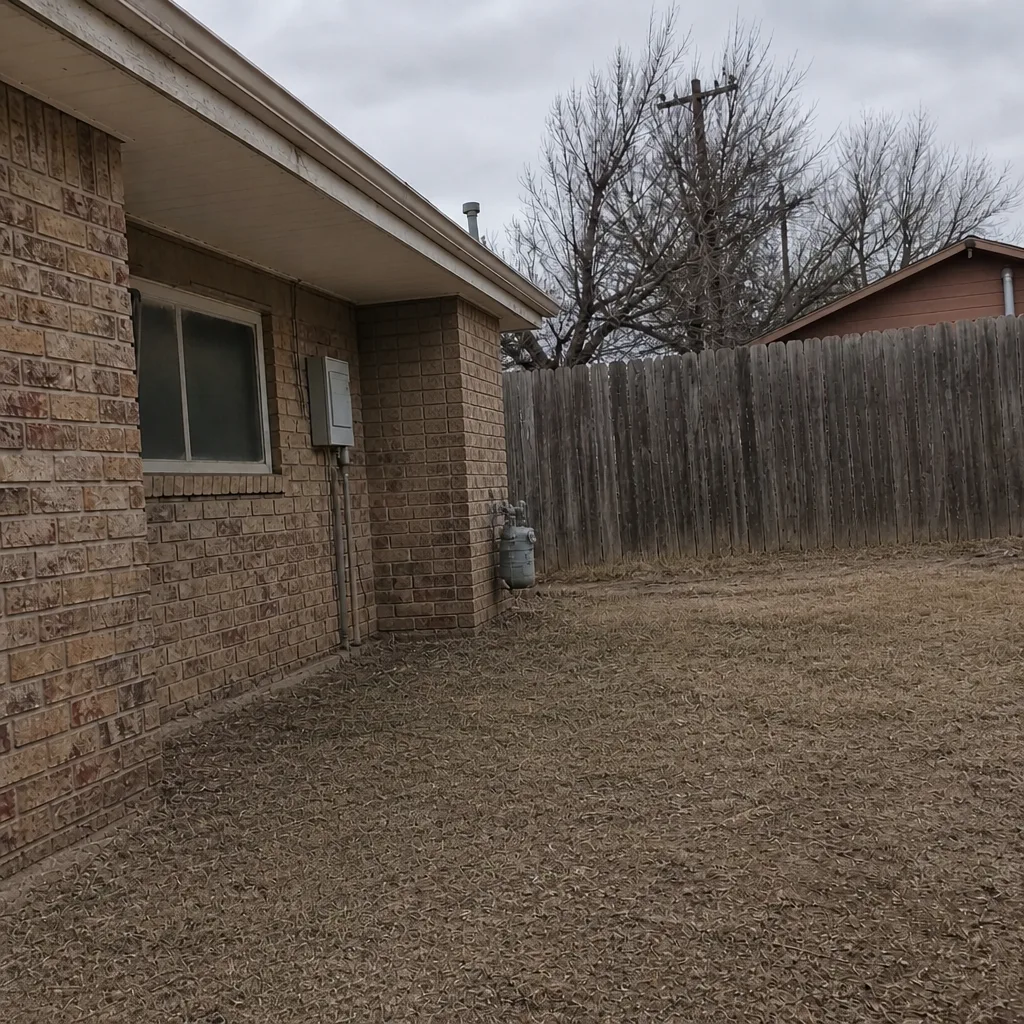 After
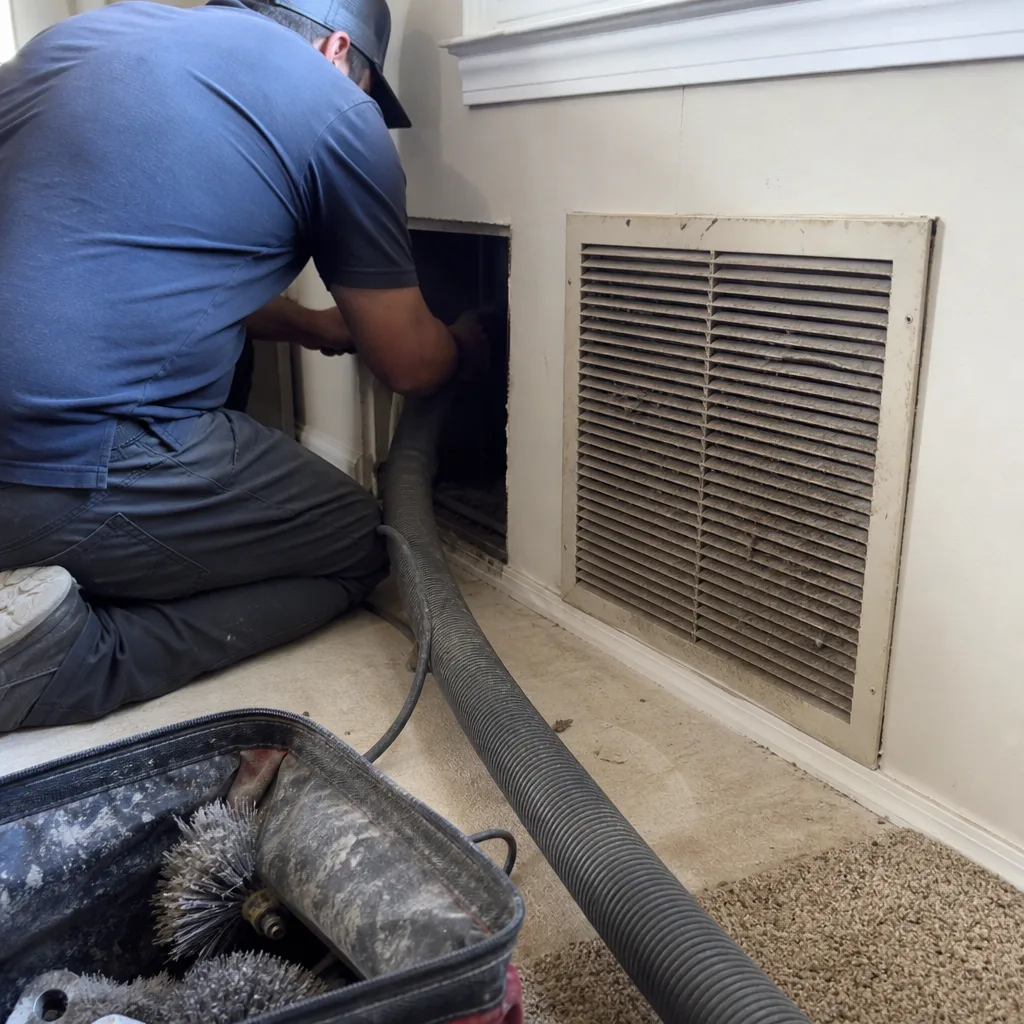 Before
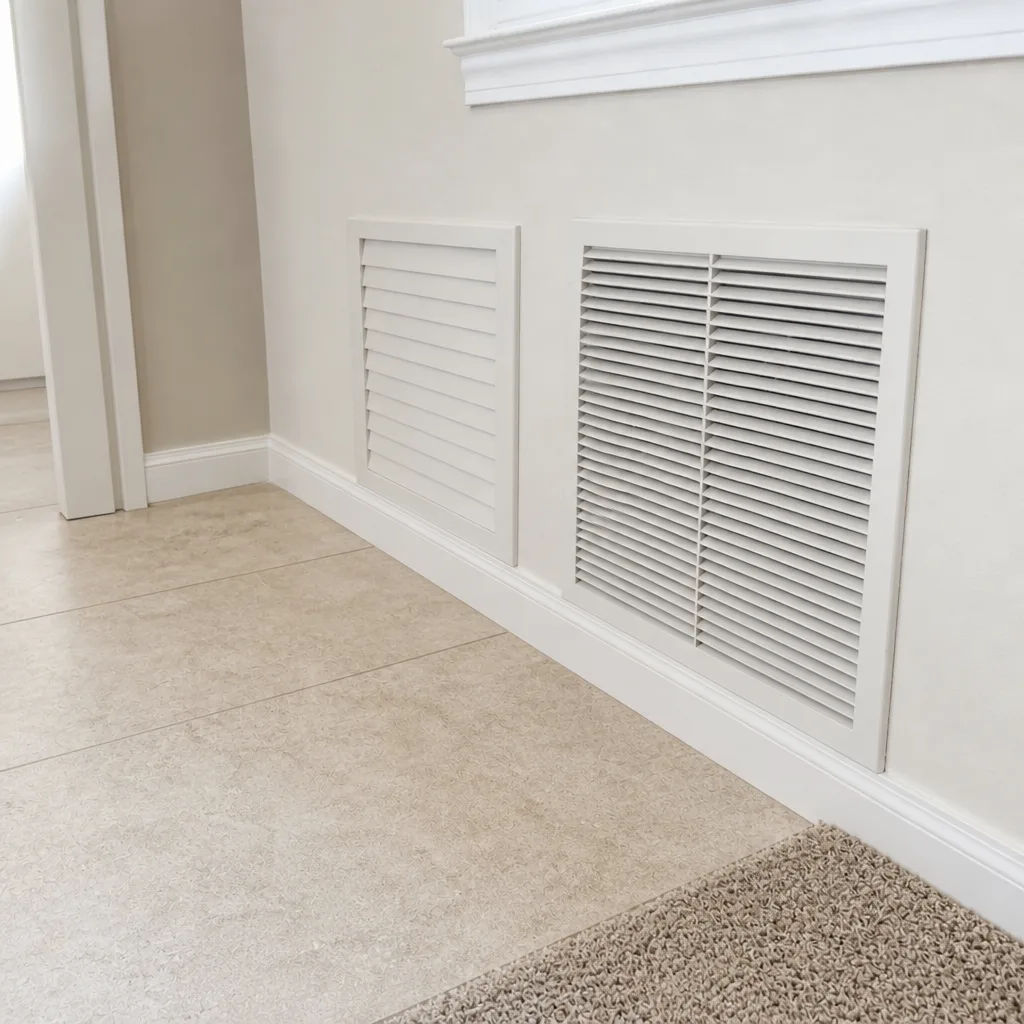 After
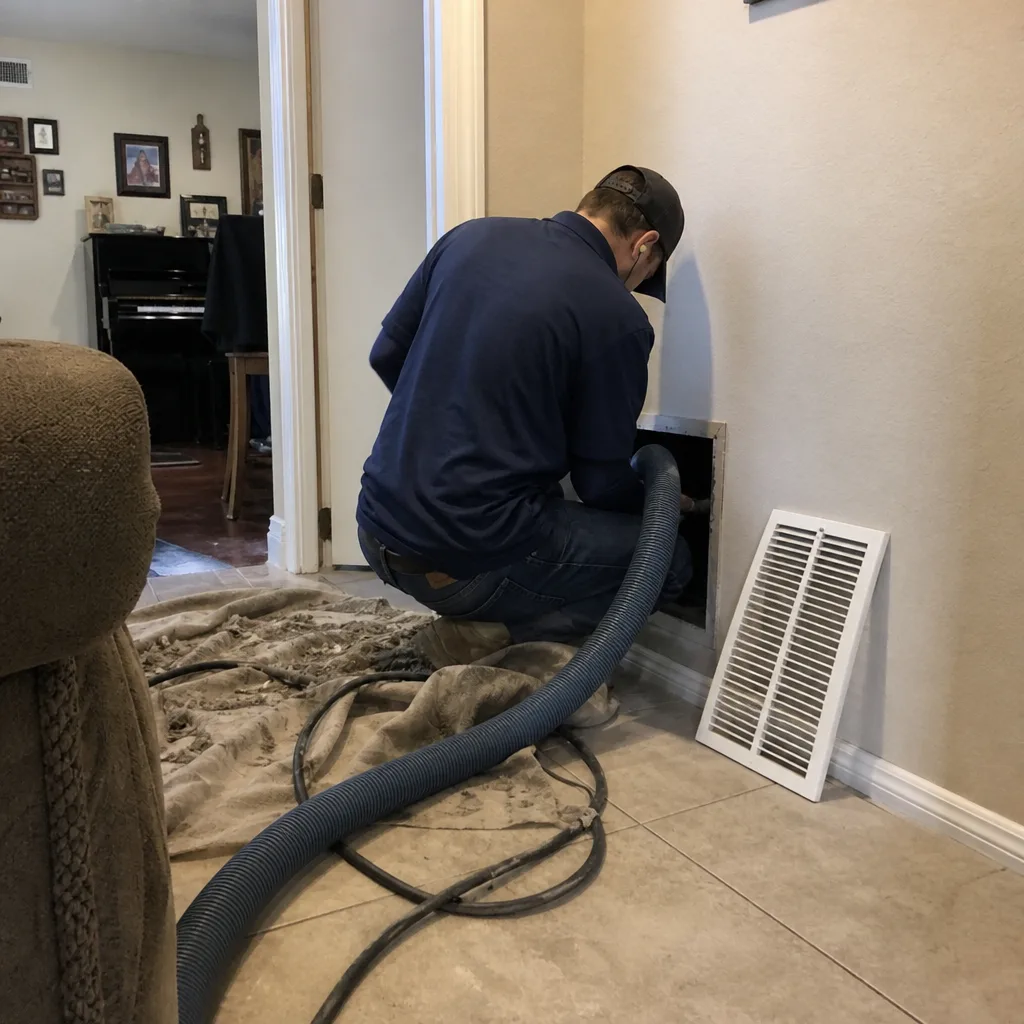 Before
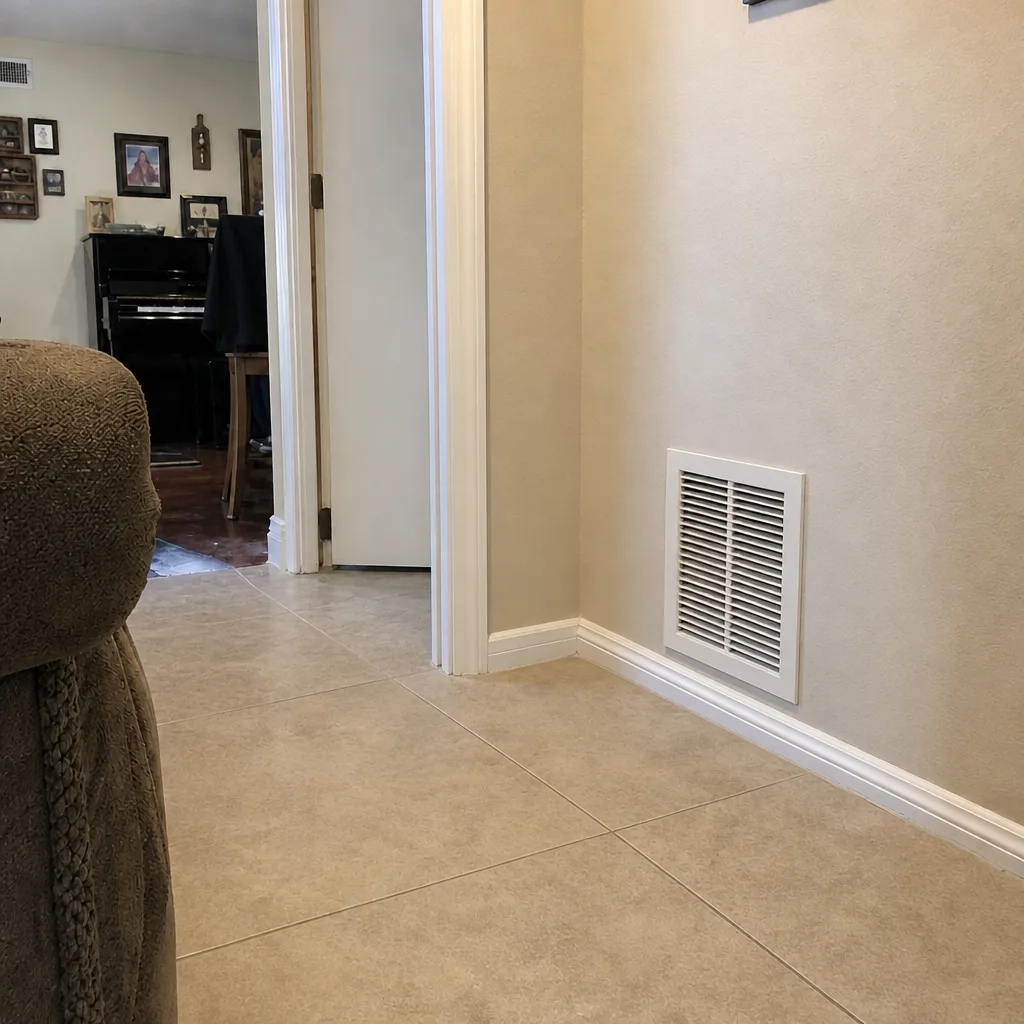 After
When to Call a Professional
Call a professional when a DIY inspection reveals something you can’t safely address: visible growth, matted debris deep in the run, vermin activity, construction dust from a renovation, or ductwork old enough that you don’t know what’s behind the liner. Call if your system is older, your filter loads suspiciously fast, or the air quality in the home has changed. Call before you brush anything in a home built before 1980. And call if the answer to “did the work actually happen?” matters to you, because a real job leaves you with before-and-after photos and a flat, agreed price. Duct Cleaning Amarillo offers free estimates in Amarillo. Call (866) 389-4505.
Frequently Asked Questions
Yes, but only for the accessible surfaces: registers, boots, return grilles, filters, and dryer vent maintenance. DIY is not effective for the settled debris deeper in your supply and return runs because consumer vacuums can’t sustain the negative pressure that captures dislodged material. Call (866) 389-4505 for a free estimate if you want a professional read on your system.
No, a stronger consumer vacuum doesn’t replicate the system that’s needed. Professional duct cleaning relies on sustained hundreds-to-over-a-thousand CFM of airflow plus mechanical brush agitation inside the duct (Rotobrush systems are built specifically for this), and containment so the dislodged material is captured rather than drifting back into the home. A rental vac still can’t turn a corner inside a trunk line or reach the plenum. Call (866) 389-4505 – the estimate is free.
For most homes, every three to five years is a reasonable baseline, and post-renovation or post-vermin it should happen sooner. Amarillo’s dry, windy climate pushes fine particulate into return systems, so filter replacement matters as much as cleaning. If your filter loads in weeks rather than months, that’s a signal to have the system looked at. Call (866) 389-4505 for an honest assessment.
Three things: sustained vacuum capacity, purpose-built agitation inside the duct, and containment for higher-particulate work. Rotobrush and Nikro systems supply the CFM and the rotary brush that can clean flex and sheet metal without tearing them. Abatement Technologies filtration and containment equipment handles the jobs where what’s in the ducts shouldn’t circulate. Your shop vac has none of that by design. Call (866) 389-4505 to talk through your specific scenario.
Ask for before-and-after photos of your own ducts, taken of the same location on the same run. A real cleaning produces visible differences in the trunk line and return plenum, not just the register boot. And it’s priced as one flat figure per system, agreed in writing before work starts, so there’s no surprise invoice. Call (866) 389-4505 – estimates are free.
Because a low teaser price often isn’t a real price. It’s a hook that turns into a larger invoice once the technician is on site, typically by re-quoting the job per vent or by finding “urgent” problems mid-visit. A genuine quote is a flat per-system figure agreed before work starts, with the cleaning scope defined up front. Call (866) 389-4505 for an honest, written estimate.
The Bottom Line
DIY duct cleaning has a real role to play: register upkeep, filter upgrades, return grille maintenance, and regular dryer vent care. Those tasks are worth doing, and they lighten the load on your system. What DIY can’t do is remove settled contamination from the trunk lines and plenum, because the physics of sustained negative pressure and source removal don’t scale down to consumer equipment. In Amarillo’s older housing stock, brushing blindly into ducts of unknown insulation type can turn a maintenance job into a hazmat problem. The rational path is: inspect first with a selfie stick and a flashlight, do the accessible maintenance yourself, and call a professional when the inspection turns up signs you can’t safely handle. See our full Duct Cleaning Amarillo service for how we approach both cleaning and repair. Professional-grade equipment and before-and-after photos of your own ducts are the proof points that matter; the coupon price is not.
If you’d like a straight read on your ducts, call (866) 389-4505 for a free estimate. We answer 24/7. Fast dispatch from 7am to 7pm, Sunday through Friday. Our technicians have up to 9 years of experience, we’re licensed and insured, and every job gets a flat per-system price agreed before work starts.
Written by the team at Duct Cleaning Amarillo.