
Last updated November 15, 2026
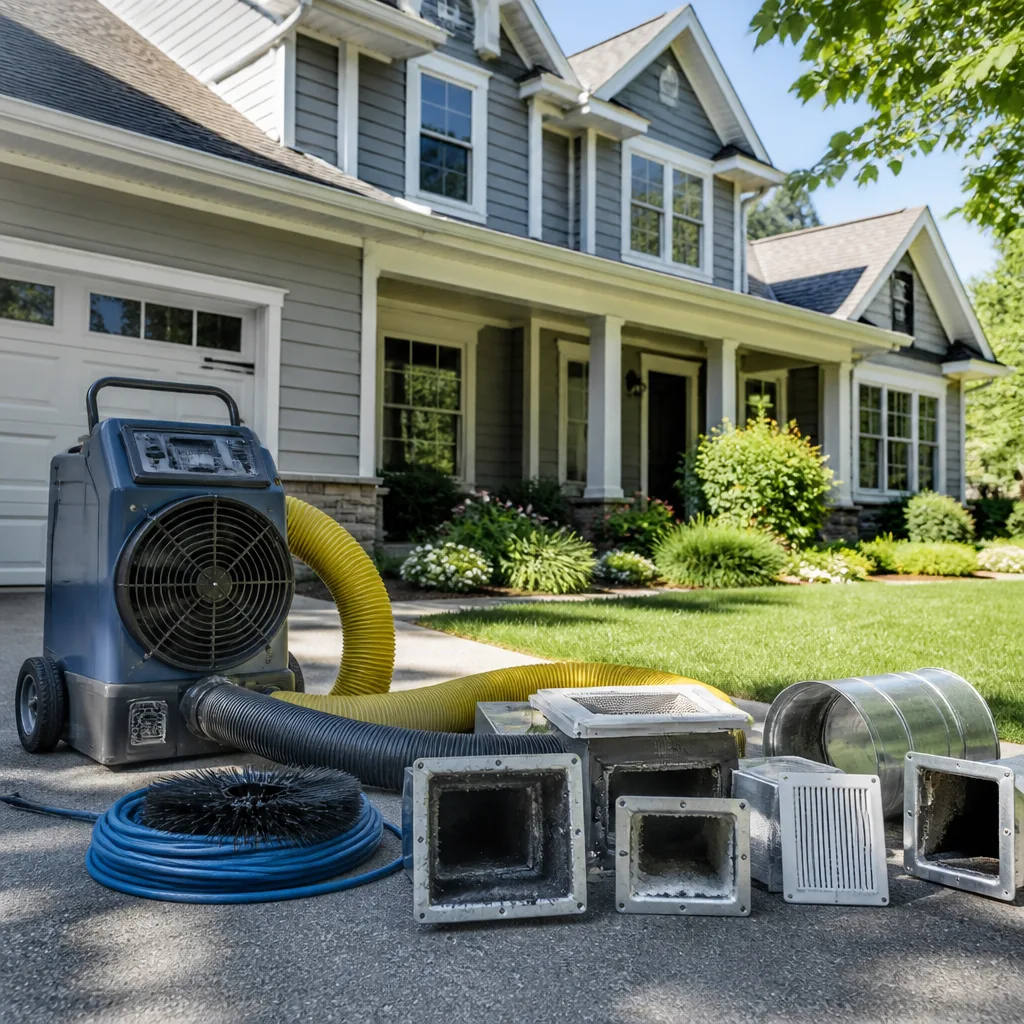 Whole-home duct cleaning
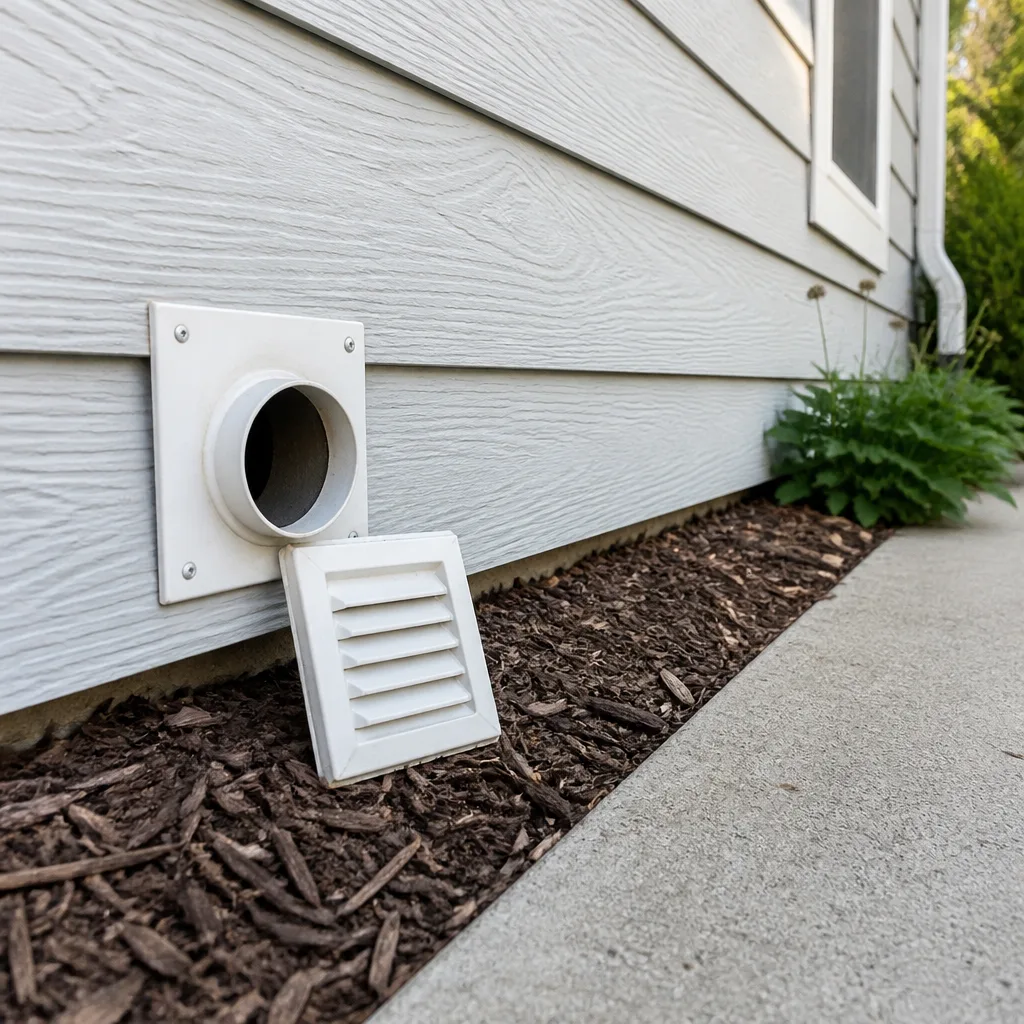 Dryer vent cleaning
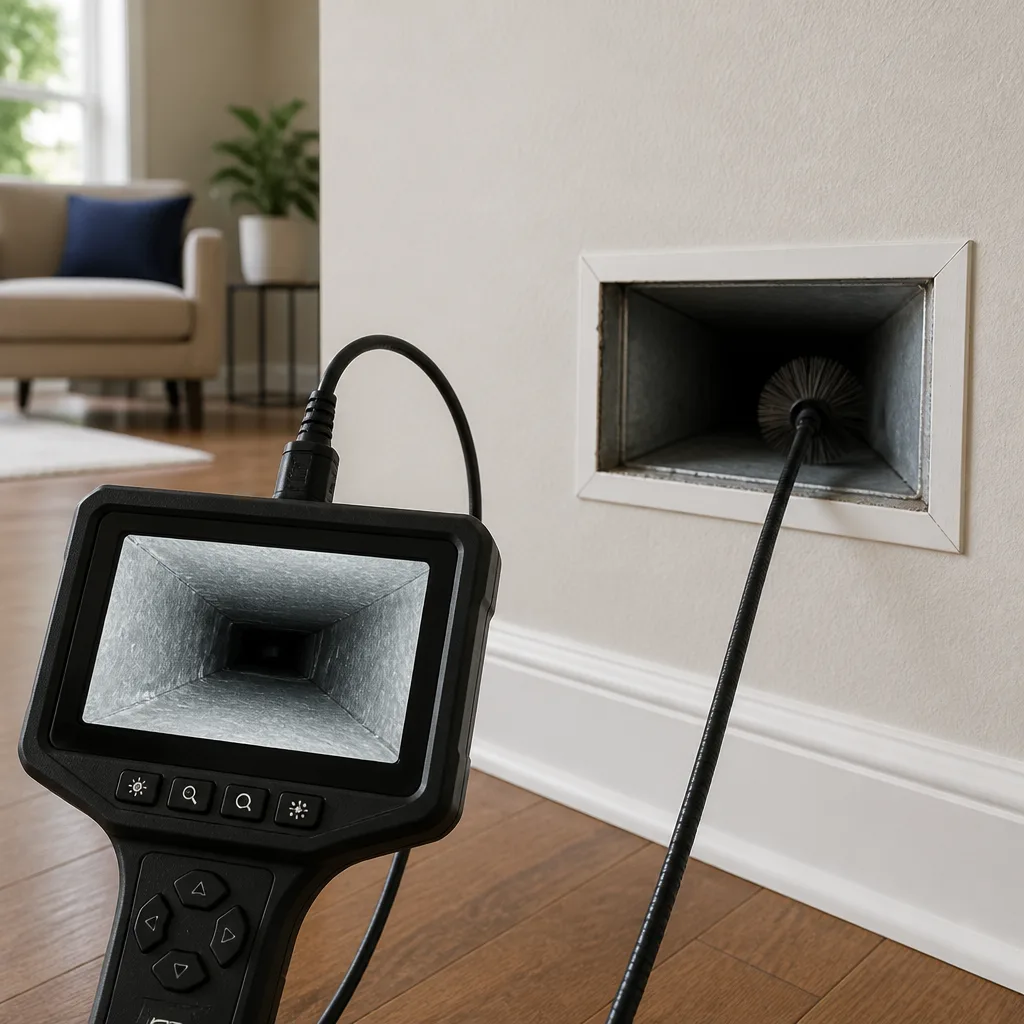 Camera inspection
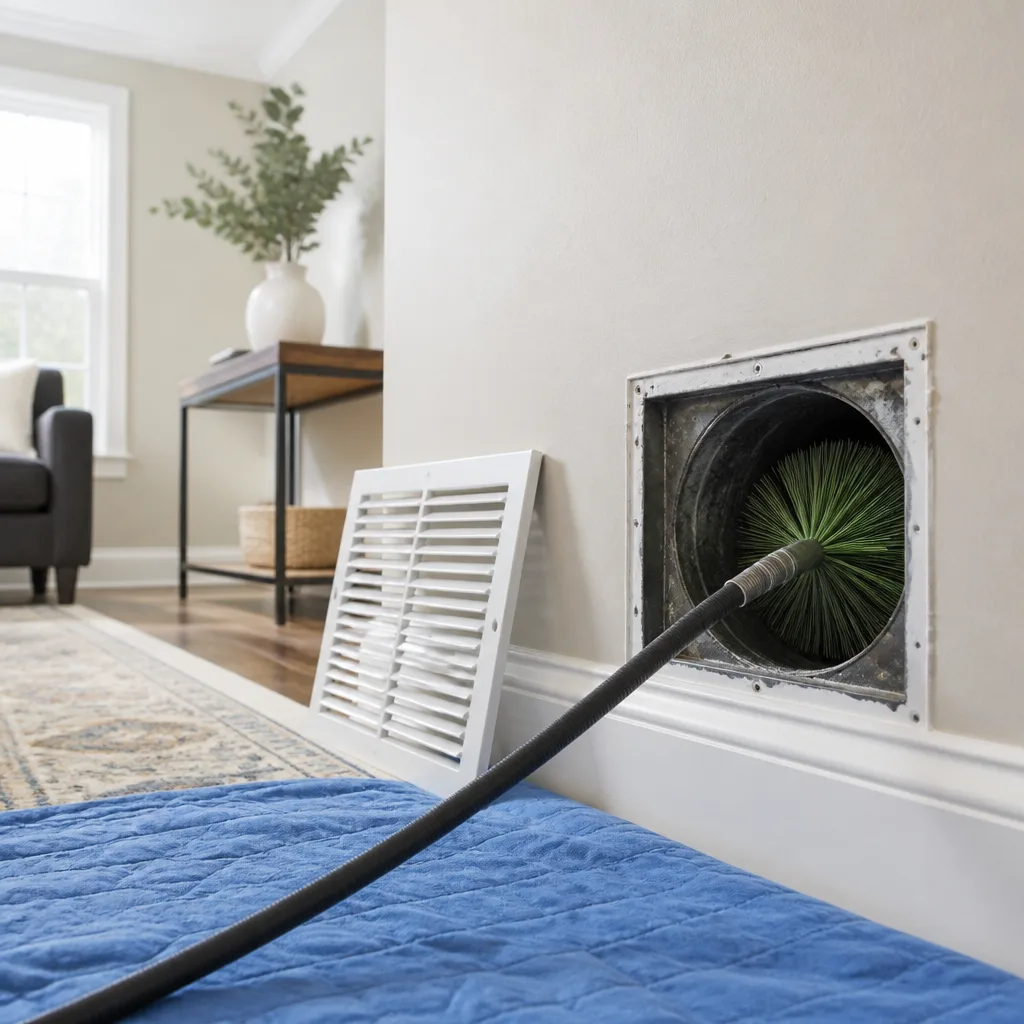 Sanitizing & deodorizing
Whole-system duct and dryer vent check with before-and-after photos - you see exactly what came out of your vents
That "$99 whole-house special" is a bait ad - the real number appears once they are in your hallway, or the "clean" is a shop-vac at the register. We photograph the inside of your ducts before and after instead.
Air Duct Cleaning Emergency Preparedness Guide for Amarillo Homes
The dust you can see after a Panhandle wind event is the least of your problems. The fine silica that has migrated into your return duct system will keep recirculating through your HVAC every time it runs, long after you’ve wiped down the furniture. Most homeowners in Amarillo treat a dust storm like a housekeeping problem. It isn’t. It’s a duct contamination event, and how you respond in the first 48 hours decides whether your system stays workable or needs serious attention. This guide covers the specific disaster profile we deal with here – dust storms, ice storms, wildfire smoke – and the post-event protocol for each, including how to document everything for insurance and how to prepare before the next one hits.
Quick Answer
After a major dust storm, ice storm, or wildfire smoke event in Amarillo, shut your HVAC off until you can check whether the filter caught the infiltration or was bypassed – then call for an inspection within 48 hours. Fine silica and submicron smoke particles behave differently in ductwork and often require professional extraction with HEPA-rated containment equipment, not a shop vacuum. Document the duct condition immediately with photos and a contractor report if you’re filing an insurance claim, and consider duct sealing before the next event to reduce how much gets in.
Styles & brands we work with
- Whole-home duct cleaning
- Dryer vent cleaning
- Camera inspection
- Sanitizing & deodorizing
Table of Contents
- The Post-Dust Storm Protocol: Your First 48 Hours
- Wildfire Smoke Events: Why Smoke Is Not Dust
- Ice Storm Aftermath: Moisture and Combustion Byproducts
- Documenting Duct Condition for Insurance
- Pre-Disaster Prep: Duct Sealing and Infiltration Defense
- Checking Your Filter: Stopped It or Bypassed It?
- Equipment That Actually Handles Panhandle Contamination
The Post-Dust Storm Protocol: Your First 48 Hours
When the wall of dust rolls through Amarillo, the infiltration happens fast. Fine particulate – mostly silica and caliche dust from the surrounding plains – gets pulled into the return side of your HVAC by the pressure differential while the system is running. If you’re home when it hits, the instinct is to shut everything down. That’s usually right. But the decision isn’t automatic, and what you do in the next two days matters.
Here’s the sequence we recommend:
- Shut off the HVAC if the storm is active. Running the system during peak dust pulls more particulate into the return ducts. Turn the thermostat to off until the air clears.
- Wait for the air to settle, then restart and observe. Once visibility returns, run the system for a few minutes and note any burning smell, reduced airflow, or visible dust blowing from supply registers. Visible dust from a supply vent means particulate is already inside the ductwork and being distributed.
- Pull and inspect the filter. If the filter is heavily loaded but intact and seated correctly, it did its job. If it’s collapsed, dislodged, or has visible dust bypass around the edges, the duct interior has likely taken on contamination.
- Photograph everything before you clean it. Filter condition, register grilles, visible dust accumulation near returns. This is insurance documentation, not housekeeping.
- Schedule a professional inspection within 48 hours. Fine silica doesn’t settle into the duct walls and stay there. Every time the blower runs, it lifts and recirculates. The longer it sits, the more it migrates into the plenum and branch runs.
One more thing about Amarillo dust storms specifically: the dust isn’t uniform. Wind-driven particulate is graded by size, so the heaviest particles drop out in the returns closest to exterior walls and windows, while finer material travels deeper into the system. A single pass with a shop vacuum on the register grilles does nothing for what’s already past the boot.
Wildfire Smoke Events: Why Smoke Is Not Dust
Smoke from regional wildfires – whether from the Panhandle itself or drifting in from New Mexico and the surrounding plains – creates a different contamination profile than dust. And this is where a lot of homeowners get into trouble, because they assume a duct cleaning is a duct cleaning.
Dust is particulate. Smoke is a mix of submicron particulate and volatile organic compounds. The particles are dramatically smaller – measured in fractions of a micron rather than tens of microns – which means they behave differently in ductwork. They don’t settle the way sand and silica do. They adhere to duct surfaces, they penetrate deeper into the system, and they can coat the internal components of your air handler. When the system runs, those particles re-entrain into the airstream and get distributed through every room.
Standard rotary-brush and vacuum cleaning – which is the right approach for dust and general debris – is not always sufficient for smoke contamination. The equipment matters here. Abatement Technologies air filtration units are built for particulate containment at the submicron level, which is what you need when you’re dealing with smoke residue rather than ordinary household dust. That’s the difference between a cleaning that looks thorough and a cleaning that actually addresses the contamination.
- Smoke smell that returns after a few days: a sign that residue is still in the duct surfaces or air handler components.
- Visible staining on register grilles: smoke deposits are typically gray-to-brown and smeary, not dry and powdery like dust.
- Headaches or irritation that worsen when the HVAC runs: worth a professional inspection, not a DIY guess.
If you’ve been through a significant smoke event in Amarillo and the smell is persisting, a standard cleaning may not be enough. Ask specifically about HEPA-rated filtration and containment equipment before you book anything.
Ice Storm Aftermath: Moisture and Combustion Byproducts
Panhandle ice storms are the event most likely to create duct problems that homeowners never connect to the weather. When temperatures drop enough for ice to accumulate, two things happen inside the HVAC system.
First, condensate lines can freeze. When a condensate drain line freezes and blocks, water backs up into the system. Depending on where the blockage sits, moisture can enter the ductwork or the air handler’s interior. Damp ductwork becomes a substrate for biological growth, and once that starts, cleaning isn’t just about dust anymore. It’s about contamination that’s actively colonizing the surfaces.
Second, when the system runs in emergency heat mode – electric resistance strips or a gas furnace working harder than usual – combustion byproducts become a consideration on the gas side and moisture becomes a consideration everywhere. If a heat exchanger or flue issue develops during the cold snap, those byproducts can migrate into the duct system.
What to watch for after an Amarillo ice storm:
- Water stains or damp insulation around the air handler or any visible duct section.
- A musty or damp smell from the vents that wasn’t there before the freeze.
- Any unusual smell from the furnace during or after the cold event – combustion smells are a safety concern, and you should have the system checked by a qualified technician before running it again.
- Ice or water visible anywhere near the outdoor unit or condensate drain.
If the duct system took on moisture, the fix isn’t just cleaning. It’s finding the source of the moisture, correcting it, and then evaluating whether duct repair is needed. That’s why we offer air duct cleaning alongside a full air duct repair service – because the two problems usually arrive together.
Documenting Duct Condition for Insurance
If a storm event damages your home and you’re filing a claim, the duct system is one of the parts of the property that adjusters most often under-value or skip entirely – because most homeowners don’t document it. Here’s what adjusters actually recognize and respond to.
- Date-stamped photos of the infiltration point. Windows, doors, and any opening where dust or smoke visibly entered. The photo needs the date and the location visible.
- A photo of the filter in place before you remove it. Show the filter seated correctly or bypassed. Show the loader face. This tells the adjuster what the system was exposed to.
- Photos of visible duct interior through register grilles. Turn off the lights, use a flashlight held at an angle so the accumulation shows up on camera. Take wide shots and close-ups.
- Before-and-after photos from the professional cleaning. This is critical. A professional cleaning report with before-and-after images of the actual ducts in your home, not stock photos, is far stronger evidence than anything you can generate yourself.
- The contractor’s written inspection report. Include the technician’s assessment of contamination level, the equipment used (name the equipment – Rotobrush, Nikro, Abatement Technologies), and the scope of work performed.
- Air quality readings if available. Some inspections include pre- and post-cleaning particulate readings. Ask for them if your contractor offers them.
Keep copies of everything, digital and printed. Adjusters respond to a clear chronological file with dated documentation, not a phone call a month later saying “I think the ducts got dirty.”
Pre-Disaster Prep: Duct Sealing and Infiltration Defense
The cheapest mitigation is the one you do before the storm arrives. Amarillo has a lot of wind events, and a significant amount of the particulate that lands in your duct system comes in through the duct system itself, not through open windows. Leaky duct joints in unconditioned space – attics, crawl spaces, garage walls – act as infiltration points during wind events. Every gap, every disconnected boot, every poorly sealed trunk joint becomes a route for wind-driven dust to enter the airstream.
Two sealing approaches are worth considering:
- Mastic sealing at the accessible joints – plenums, boots, register connections, trunk transitions. It’s a durable approach for exposed ductwork and it holds up well to Panhandle temperature swings.
- Aeroseal for the parts of the system you can’t easily reach – the enclosed branch runs and the interior of the duct system. Aeroseal is applied from inside the ductwork using an aerosolized sealant that finds and plugs small leaks. For broader infiltration reduction across the whole system, this is the more thorough method.
What doesn’t hold up well to Panhandle conditions: foil tape alone on high-cycle joints, fabric-based flex duct with compromised outer jackets, and poorly supported runs that flex and crack at the seams with every pressure cycle. If your system has any of those, sealing the accessible points is a reasonable start, but a full evaluation is worth the phone call.
If you’re in a home with an older HVAC system in one of Amarillo’s established neighborhoods – the ones built before duct sealing was standard practice – this is probably one of the highest-return improvements you can make for indoor air quality.
Checking Your Filter: Stopped It or Bypassed It?
This is the single most diagnostic step you can take after any infiltration event. A filter that caught the contamination is the best possible outcome. A filter that was bypassed – meaning dust went around it rather than through it – means the duct interior got loaded.
What to check:
- Filter seating. Pull the filter and check whether it was properly seated in the rack. If there are visible dust trails around the edges, it was bypassed.
- Filter bypass gaps. A filter slot that’s oversized, or that’s missing a gasket, allows unfiltered air to pass. This is common in older systems.
- Filter loading pattern. If the filter is uniformly loaded across the face, it caught what it was supposed to catch. If one side is much cleaner than the other, air was flowing around rather than through.
- MERV rating. Higher MERV captures finer particulate, but a higher-MERV filter also restricts airflow more. The right MERV for your system is a balance. A filter that’s too restrictive can bypass at the filter rack and cause other problems. Ask your HVAC technician what rating your system is designed for.
This is one area where the details matter. In our experience, a lot of Amarillo systems are running filter slots that were never designed to seal against the kind of infiltration a Panhandle dust storm puts through them.
Equipment That Actually Handles Panhandle Contamination
Here’s the part where the coupon-based duct cleaning services get sorted out from the ones that actually do the job. The equipment matters, and it’s not a small thing.
Rotobrush and Nikro systems are the rotary-brush and negative-pressure vacuum setups that commercial contractors and industrial facilities use. The rotary brush agitates the duct surface to release adhered particulate, and the negative-pressure vacuum captures it before it can re-enter the space. Consumer shop vacs and “air whip” systems don’t create enough negative pressure to contain fine silica or smoke residue – they loosen it and redistribute it. That’s not a duct cleaning. That’s moving the contamination around the house.
For more serious contamination events – wildfire smoke, fire loss, mold remediation adjacent, heavy construction dust – Abatement Technologies units provide the HEPA-rated containment that submicron particulate requires. They’re built for jobs where the contamination is a health concern rather than just a housekeeping concern.
And the products behind the cleaning matter too. Our familiarity with Honeywell and Aprilaire filtration and humidification systems means we’re equipped to recommend whole-home solutions when a cleaning alone doesn’t get you where you need to be. If the underlying problem is infiltration, better cleaning isn’t the full answer – better filtration and sealing are.
The bottom line on equipment: a duct cleaning is a real service when the equipment is real. If a quote is dramatically below what professional equipment costs to run, that’s a signal about what you’re actually getting. For a clearer picture of how we approach the job, see Duct Cleaning Amarillo.
Common Mistakes to Avoid
- Running the HVAC during an active dust storm. The system pulls dust in through the returns at full pressure. Wait it out, then run a short cycle to check the system.
- Treating smoke like dust. Standard cleaning doesn’t remove submicron residue from smoke. Ask about HEPA-rated containment before you book.
- Skipping the documentation step. Once the ducts are cleaned, the evidence of what was there is gone. Photos before cleaning are what adjusters need.
- Assuming a fresh filter solved the whole problem. A filter catches what reaches it. It doesn’t clean what’s already past it. The duct interior still needs evaluation.
- Booking on price alone. A low per-vent price and a professional equipment setup are mutually exclusive for a reason. One flat price per system, agreed before work starts, is a fairer arrangement than a coupon price that changes once the technician is on site.
- Waiting months after the event. The 48-hour window matters for Amarillo dust events because fine particulate recirculates every time the system runs. The longer you wait, the deeper it settles.
- Ignoring the dryer vent. A dust storm isn’t the only fire-risk event for Amarillo homes. Lint accumulation in a dryer vent is a separate, ongoing hazard that deserves its own attention.
See the difference
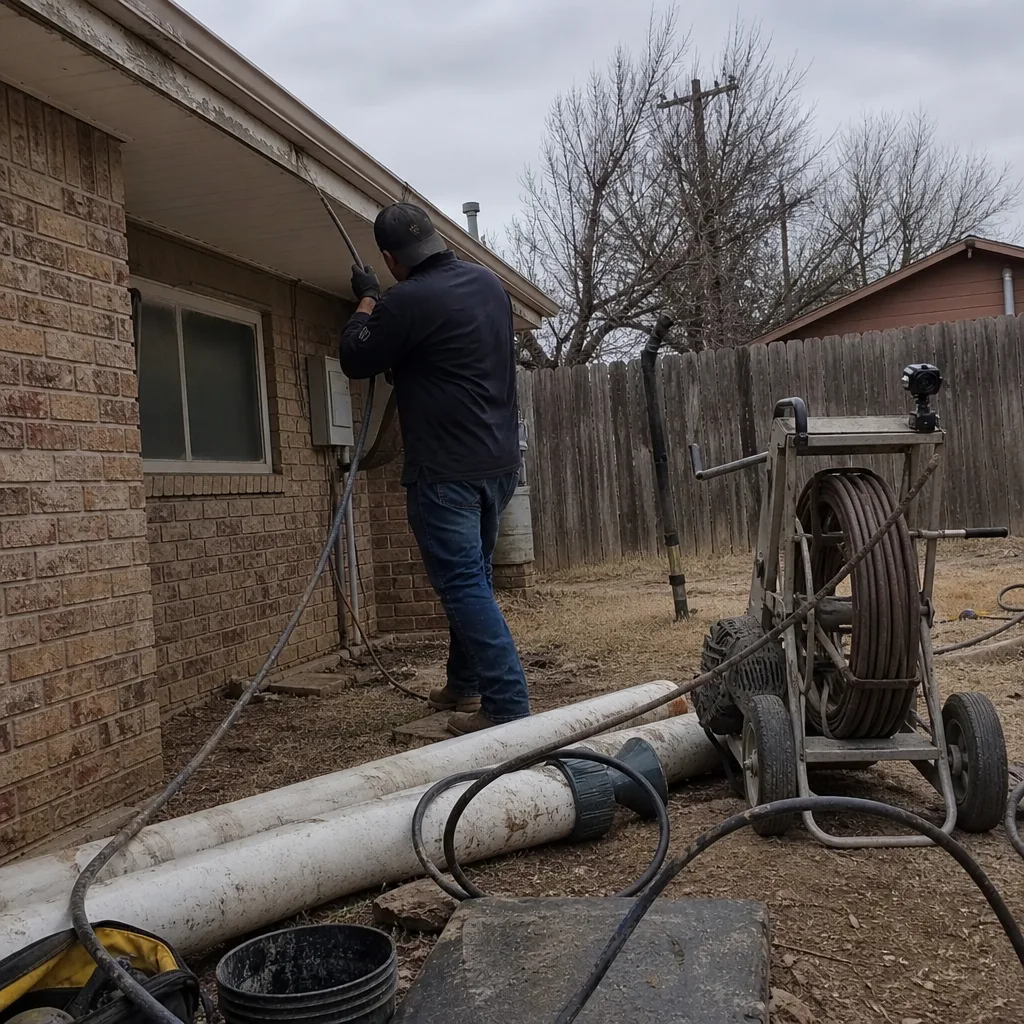 Before
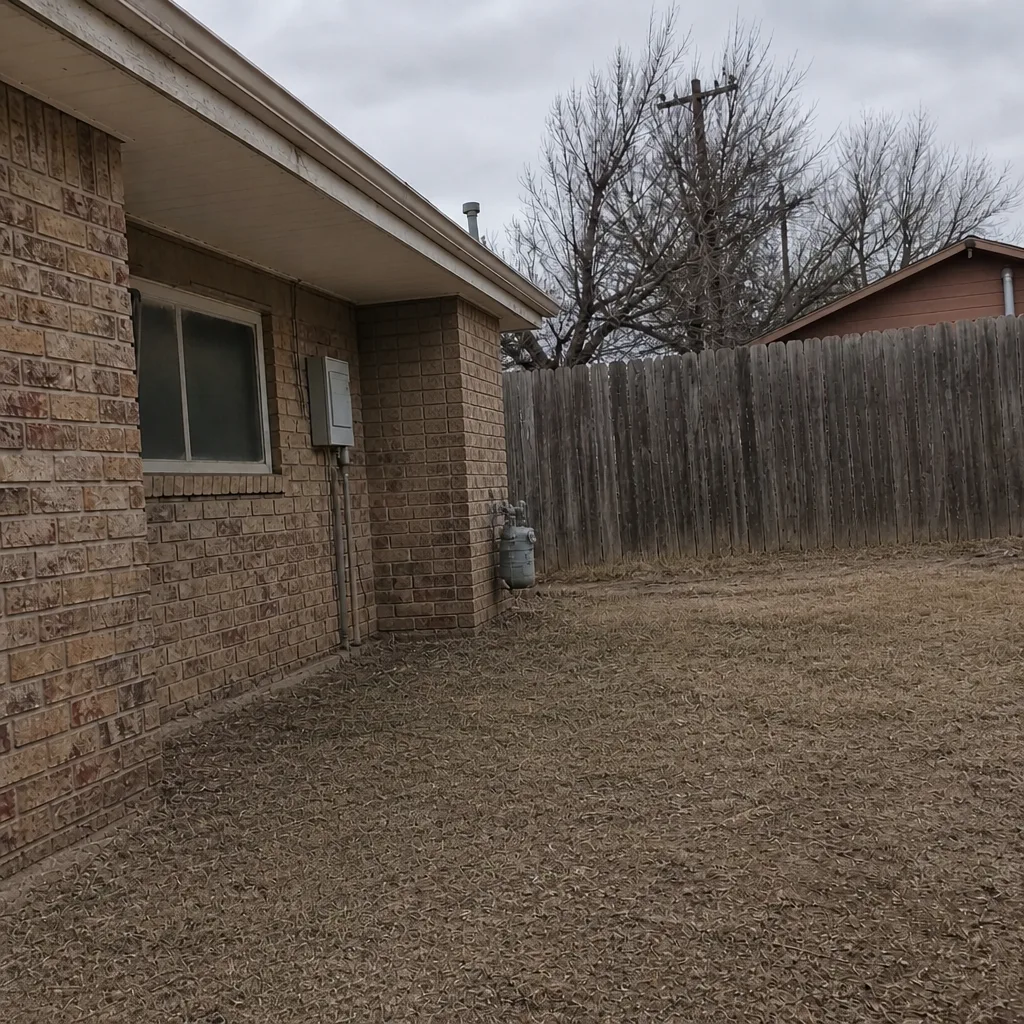 After
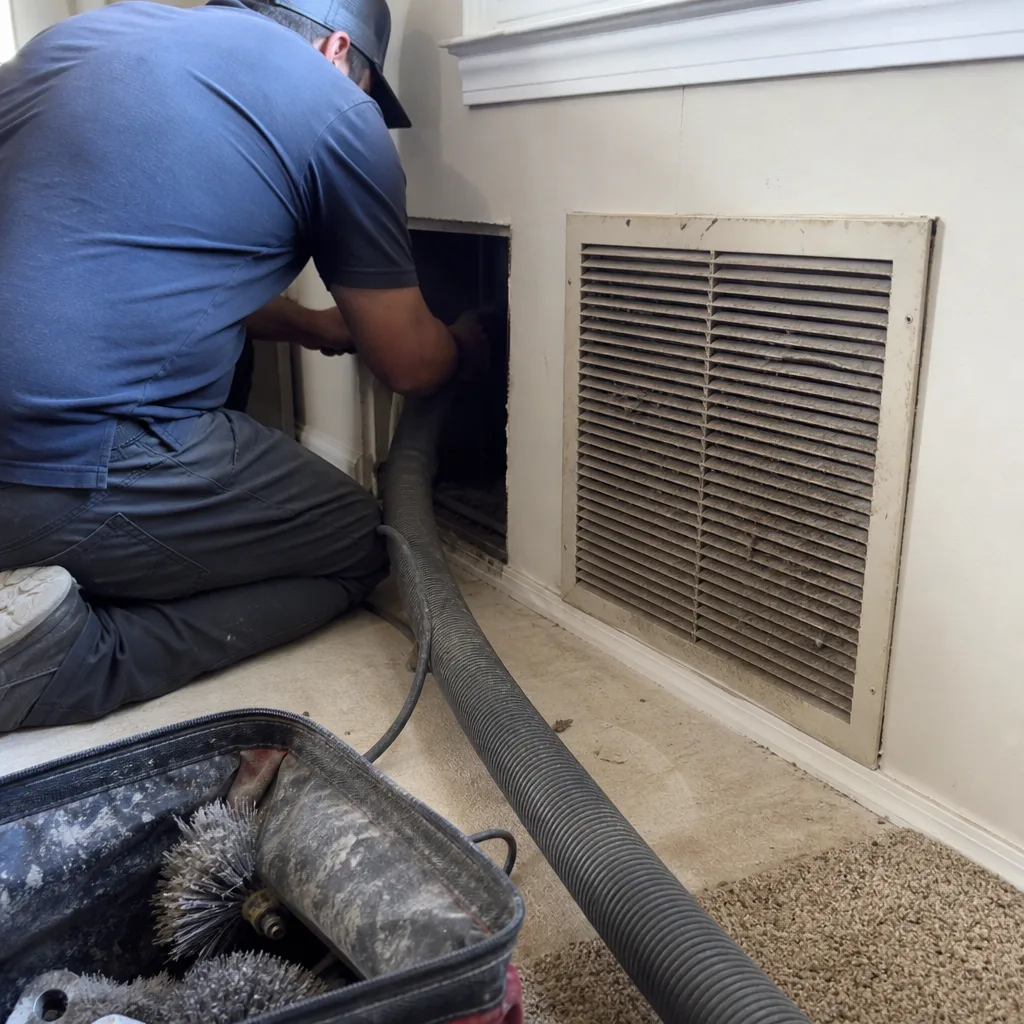 Before
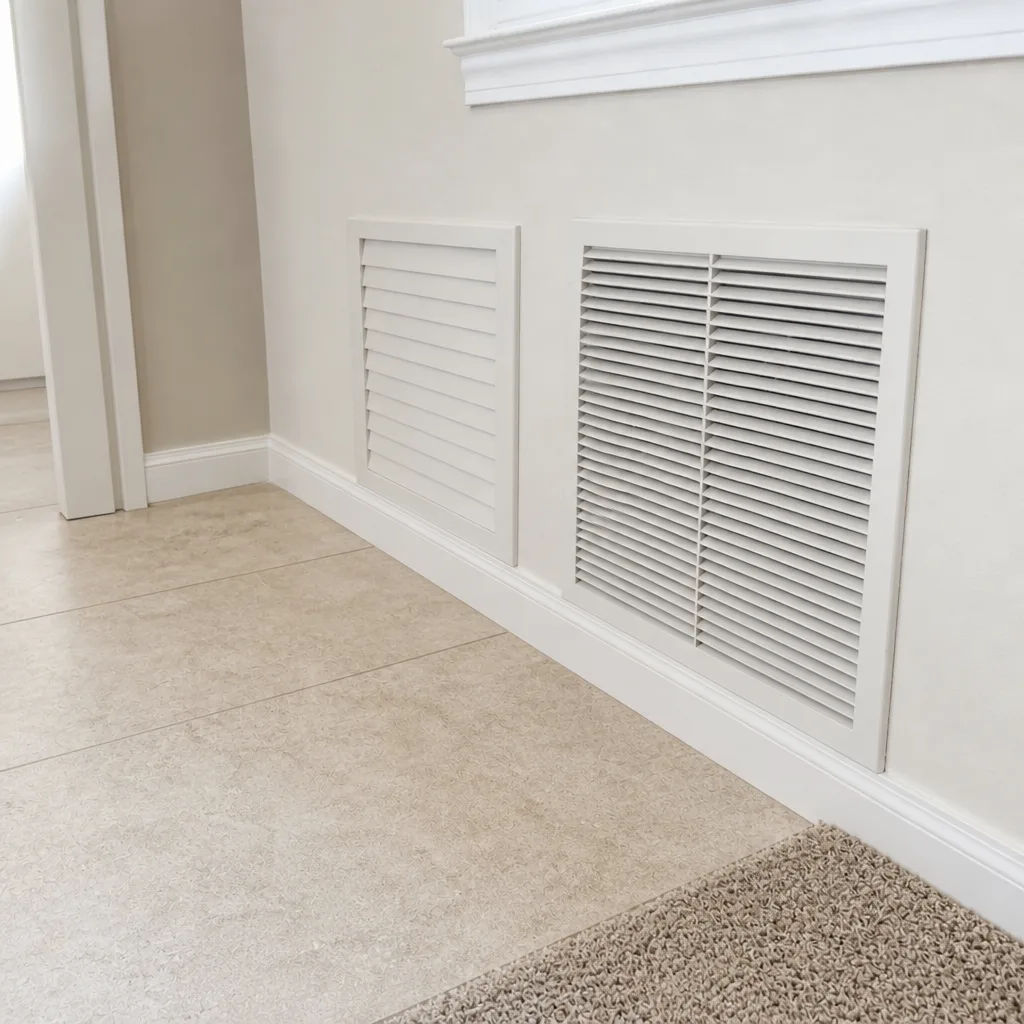 After
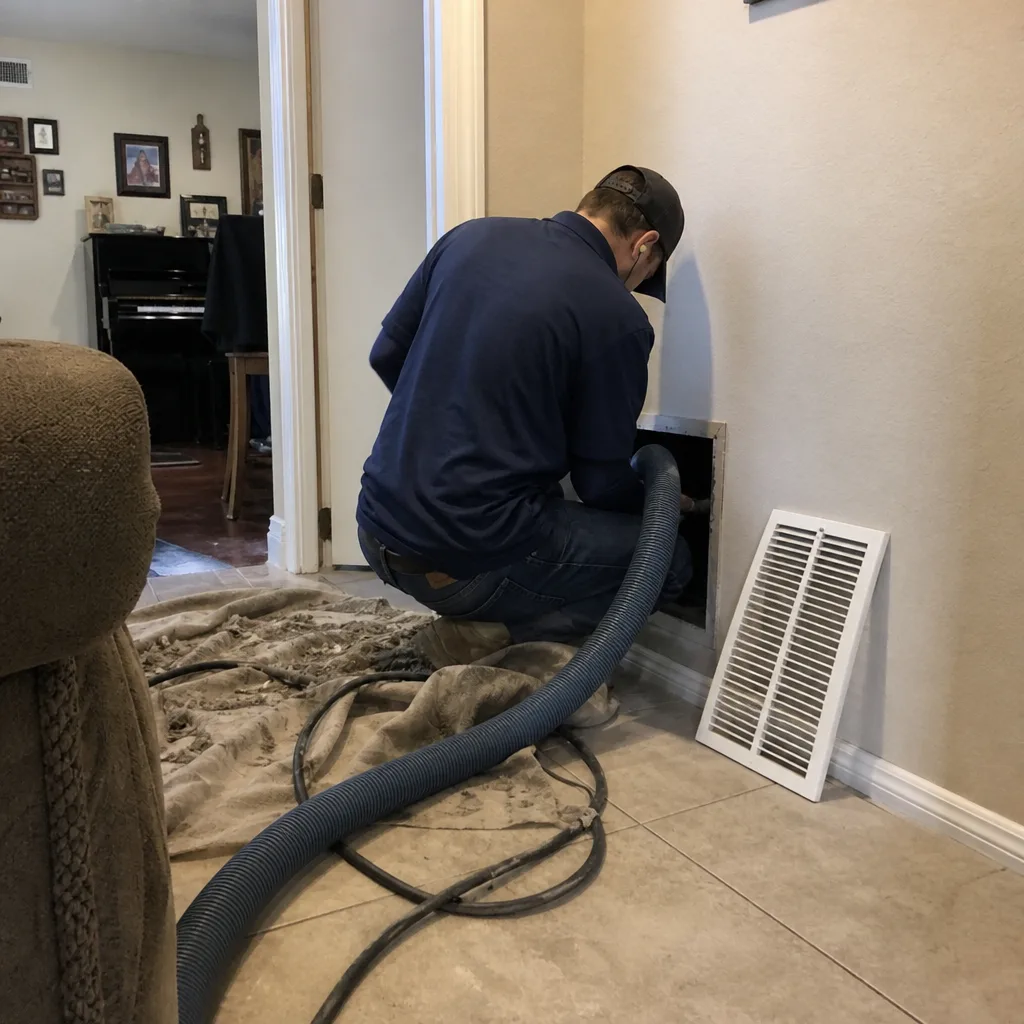 Before
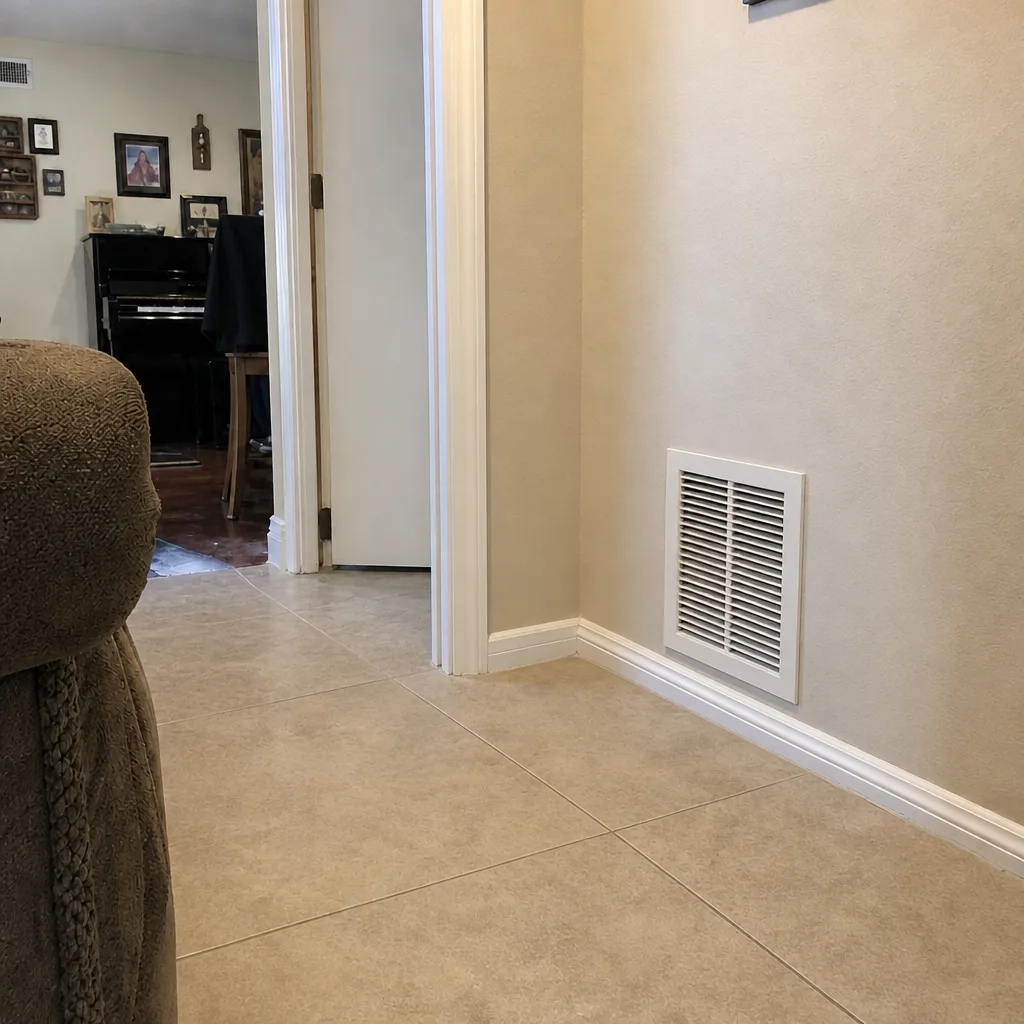 After
When to Call a Professional
Call for professional duct cleaning in Amarillo if you’ve been through a significant dust storm, ice storm, or wildfire smoke event and any of the following apply: visible dust blowing from supply registers, persistent smoke smell when the HVAC runs, water stains or musty odor near the air handler, a filter that was visibly bypassed during the event, or any concern about contamination after renovation work. Age of the system is another factor – if it has been running more than a decade without a professional cleaning, it’s overdue regardless of the recent weather.
Duct Cleaning Amarillo offers free estimates in Amarillo. Call (866) 389-4505. We answer 24/7. Fast dispatch from 7am to 7pm, Sunday through Friday.
Frequently Asked Questions
Most whole-system cleanings in Amarillo fall in the range of a few hundred dollars, with the price driven by the number of branch runs, the level of contamination, and whether repairs are needed. We set one flat price per system, agreed in writing before work starts, so you won’t get a surprise on the invoice. Call (866) 389-4505 for a free estimate – the written estimate sets the final price.
Cheap quotes usually mean low-pressure equipment, no containment, and a short visit that agitates dust without extracting it. If a quote is dramatically lower than the cost of running professional rotor-brush and vacuum equipment, the equipment isn’t coming out. We use Rotobrush and Nikro systems, and we take before-and-after photos of your actual ducts so you can see what was done. Call (866) 389-4505 for a free estimate.
Ask for before-and-after photos of your own ductwork, not stock images, and ask which equipment was used on the job. We provide both – photos taken in your home and the specific brand and model of the equipment that cleaned your system. That’s the standard we hold ourselves to. Call (866) 389-4505 for a free estimate.
Within 48 hours is the target. Fine silica doesn’t settle permanently into the duct walls – it lifts and recirculates every time the blower runs. The sooner the system is cleaned and inspected, the less of it migrates into the plenum and branch runs. Call (866) 389-4505 for a free estimate.
Yes. Smoke particles are submicron and coat duct surfaces differently than dust does, which is why smoke cleanup often requires HEPA-rated containment equipment like our Abatement Technologies units. Standard rotor-brush cleaning is right for dust; smoke needs the containment layer on top of it. Call (866) 389-4505 for a free estimate.
Date-stamped photos of the infiltration point, photos of the filter in place before you remove it, visible duct interior shots taken with a flashlight, before-and-after photos from the professional cleaning, and the contractor’s written inspection report with the equipment listed. A chronological file with all of these is what adjusters work from. Call (866) 389-4505 to schedule an inspection for documentation purposes.
The Bottom Line
Amarillo’s storm profile – dust, ice, wildfire smoke – creates duct contamination scenarios that generic emergency prep guides don’t cover. The pattern is consistent across all three: infiltration happens fast, the filter’s performance determines what got past it, and the 48-hour window is when professional intervention makes the biggest difference. Document everything before you clean anything, ask specifically about equipment (Rotobrush, Nikro, Abatement Technologies) and not just about price, and consider sealing the duct system before the next event rather than after. If the storm has already happened, get the inspection done. If you’re preparing, get the sealing scheduled. Either way, the earlier you act, the cheaper the fix.
If your Amarillo home needs an inspection after a recent event, call us at (866) 389-4505. We answer 24/7. Fast dispatch from 7am to 7pm, Sunday through Friday. Free estimates, one flat price per system, and before-and-after photos of your own ducts. Our technicians have up to 9 years of experience, and they’re equipped to handle dust, smoke, and moisture contamination with professional-grade equipment. We keep dryer vent cleaning as a separate fire-safety service rather than a bundled afterthought, and we cover the surrounding Amarillo area – so whether you’re preparing for the next storm or recovering from the last one, we’re a phone call away.
Written by the team at Duct Cleaning Amarillo.