
Last updated November 15, 2026
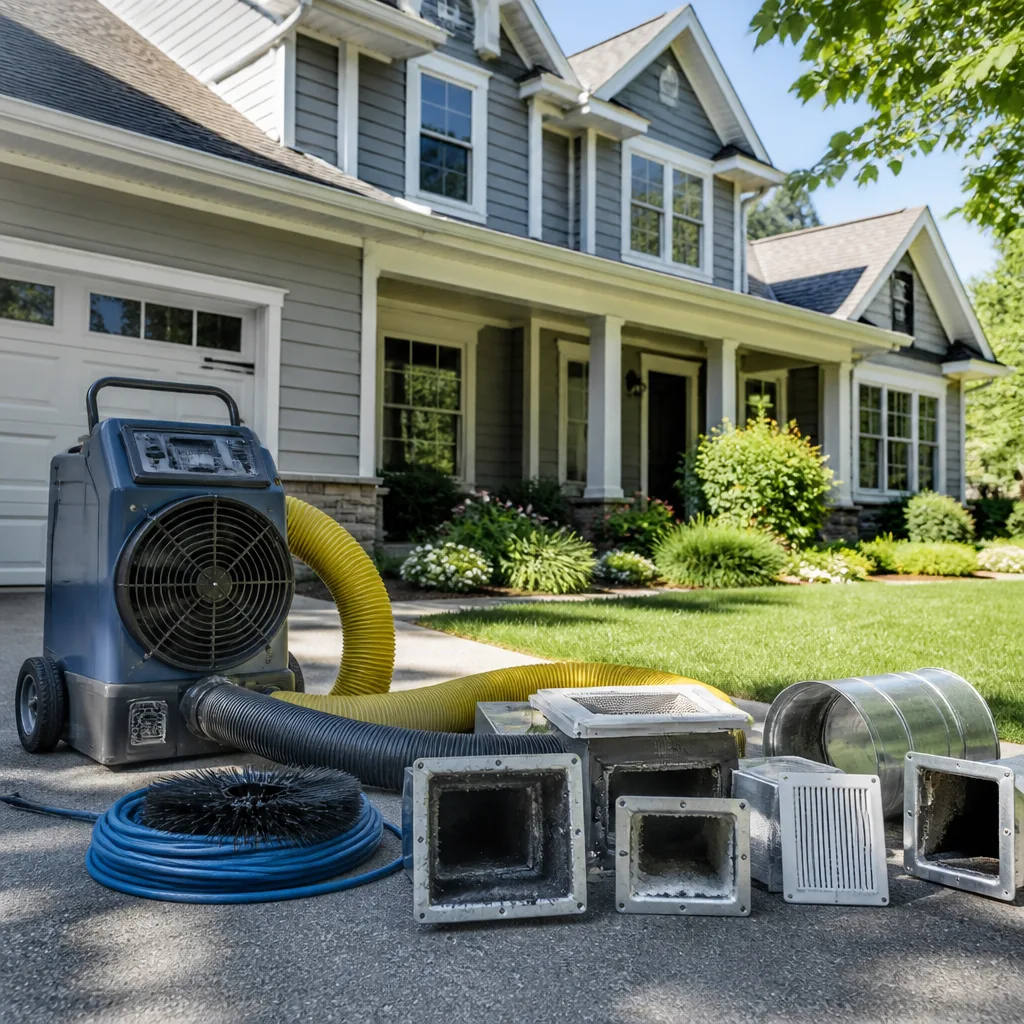 Whole-home duct cleaning
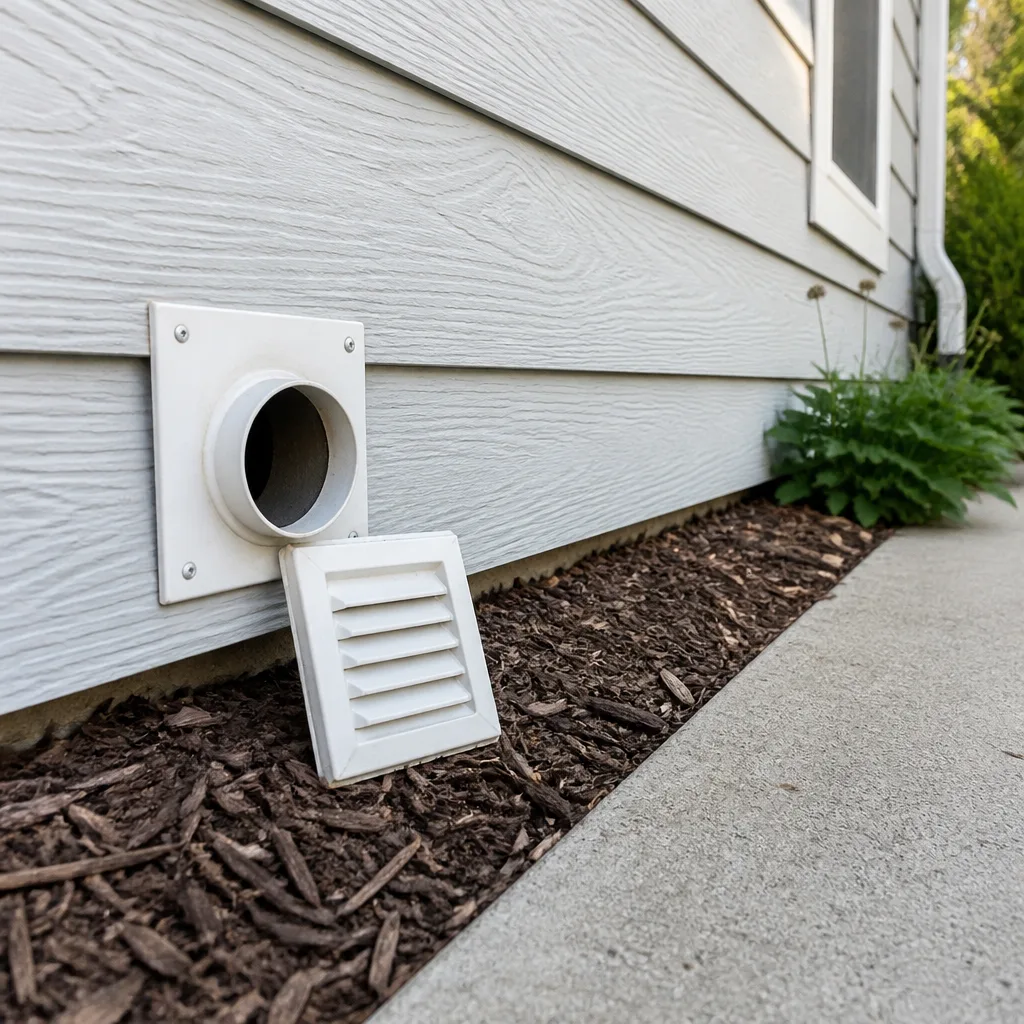 Dryer vent cleaning
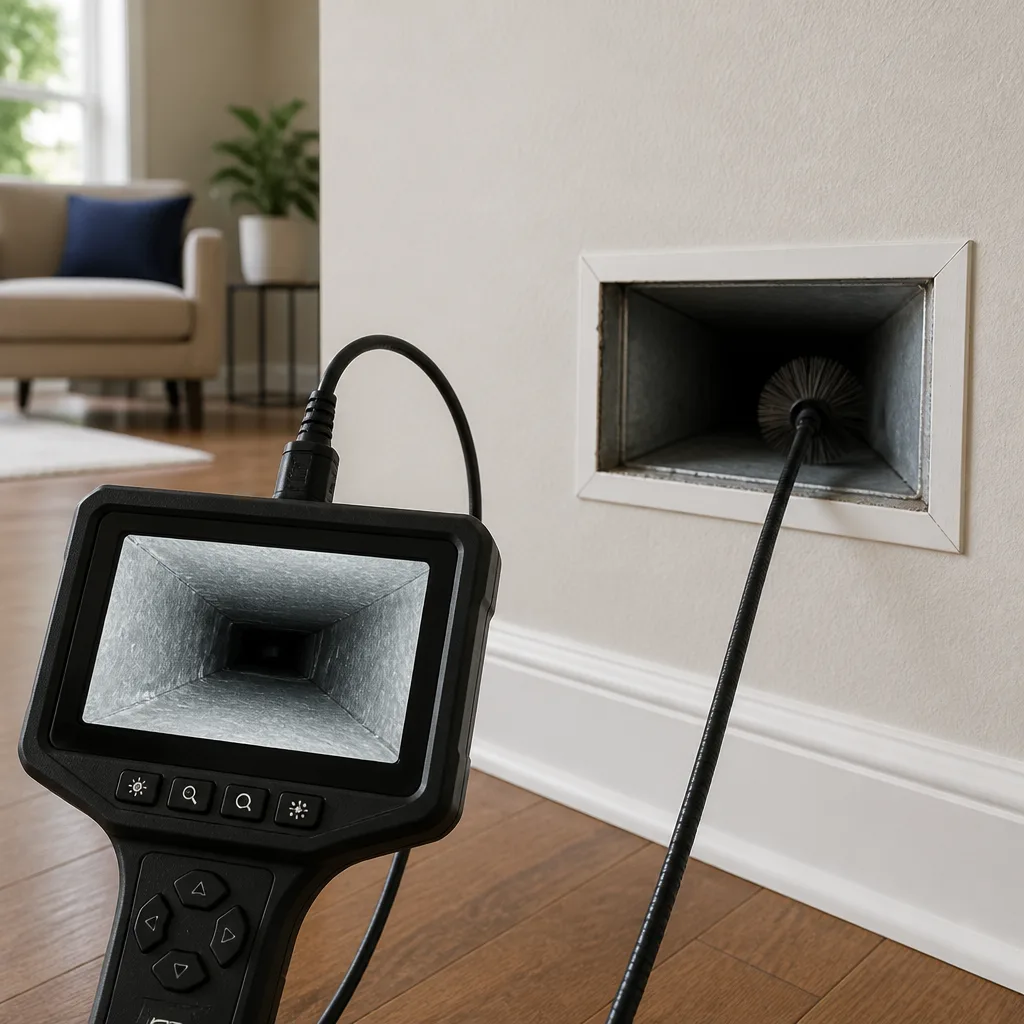 Camera inspection
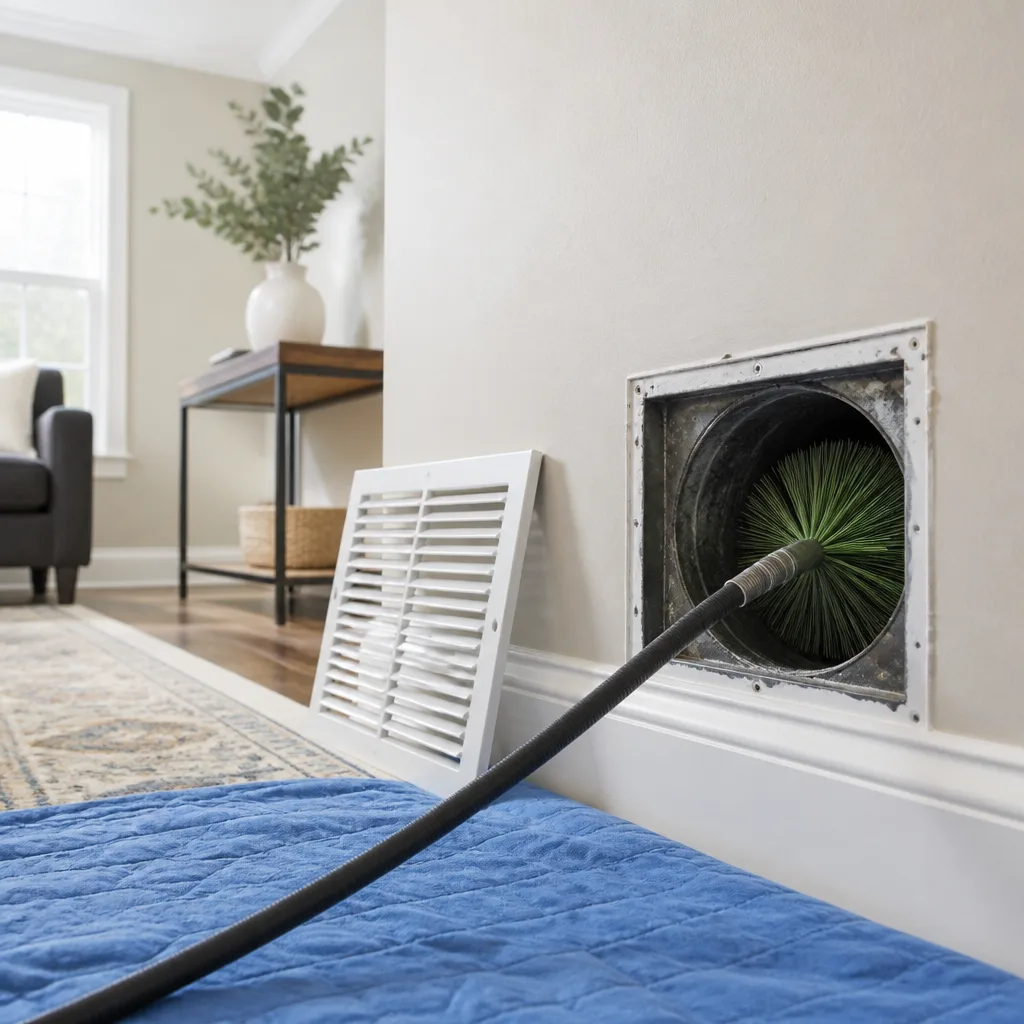 Sanitizing & deodorizing
Whole-system duct and dryer vent check with before-and-after photos - you see exactly what came out of your vents
That "$99 whole-house special" is a bait ad - the real number appears once they are in your hallway, or the "clean" is a shop-vac at the register. We photograph the inside of your ducts before and after instead.
Air Duct Cleaning Troubleshooting in Amarillo: Common Problems and How to Fix Them
If one room in your house is always 5°F hotter than the rest, your thermostat isn’t lying. Your duct system is leaking conditioned air into your attic before it ever reaches that vent. Most homeowners we hear from blame the HVAC unit first, and then call for a cleaning hoping that solves it. Sometimes cleaning is exactly right. Sometimes it’s the wrong service entirely, and no amount of brushing changes the pressure problem. This guide teaches you to read the symptoms your ductwork is already broadcasting here in Amarillo, so you know whether you’re dealing with dust, a breach, moisture, or a collapsed run before you pay anyone.
Quick Answer
Airflow problems in Amarillo usually trace back to one of four duct defects: joint separation in attic runs, a collapsed or kinked flex duct, a return-side breach pulling unfiltered air from the attic, or moisture at a specific joint. Cleaning fixed the first and the last; resealing and repair fix the middle two. The trick is matching the symptom to the cause before you book a service.
Styles & brands we work with
- Whole-home duct cleaning
- Dryer vent cleaning
- Camera inspection
- Sanitizing & deodorizing
Table of Contents
- How Do You Match a Duct Symptom to Its Cause?
- How Do You Test for Negative Pressure at Return Vents?
- Why Do Duct Joints Separate in Amarillo Attics?
- Does Duct Cleaning Fix the Problem, or Do You Need Repair?
- What Does a Rotobrush Camera Inspection Actually Show?
- Why Are Rooms Still Dusty After Cleaning?
- What Causes a Musty Smell From Your Vents?
- How Do You Tell a Duct Problem From a Dryer Vent Problem?
How Do You Match a Duct Symptom to Its Cause?
Every duct problem has a signature. The airflow symptom you notice points to a specific defect, and the defect determines which service actually fixes it. Here’s the map we work from when a homeowner describes what they’re experiencing.
- Weak airflow at one vent, strong air elsewhere: usually a collapsed, kinked, or disconnected flex run feeding that register. The blower is moving air fine; the air just can’t reach the room.
- Weak airflow everywhere at once: often an undersized return, a return-side breach, or a filter that’s choking the system. Cleaning helps if the trunk line is loaded with debris.
- Dusty rooms within days of cleaning surfaces: a return-side breach pulling unfiltered attic or crawlspace air into the system before it reaches the filter.
- Musty smell from specific vents: moisture intrusion at a duct joint or a run that’s sitting in damp insulation.
- Whistling or rattling at a register: a duct sizing issue or a loose joint that’s vibrating under pressure.
- Uneven room temperatures, 5°F or more: a leaking run in the attic losing conditioned air before delivery.
Notice that only two of these six are cleaning problems. The rest are repair or reseal problems, and that distinction is the whole point of this guide. A homeowner in Amarillo who calls for a cleaning expecting it to fix weak airflow will often be disappointed if the actual cause is a collapsed run, and that disappointment isn’t the cleaning company’s fault; it’s a diagnosis gap. The right move is a camera inspection before the service is booked, not after.
How Do You Test for Negative Pressure at Return Vents?
You can check your return pressure yourself with a lit incense stick, a flashlight, and five minutes. This is a diagnostic, not a repair. It tells you whether your system is pulling unfiltered air into the return side, which is the single most common source of persistent household dust.
- Light the incense stick and let it burn until you have a steady smoke stream.
- Hold the stick near the face of each return grille with the HVAC system running on fan only. Watch how the smoke moves.
- Smoke that pulls cleanly into the grille is normal. That’s your blower doing its job.
- Smoke that curls away from the grille edge, or gets sucked toward the gap where the grille meets the drywall, indicates a pressure leak. That gap is where attic air is coming in behind your filter.
- Repeat at every return vent. If most returns pull well but one doesn’t, focus on that run first.
- Check the attic side if you can access it safely. Smoke near the return duct joints up there will reveal where separation is happening.
What you’re looking for is the edge test. Clean air gets pulled through the filter, but any return joint that’s separated lets attic air slip in past the filter entirely. The incense smoke shows you where. Most Amarillo homes we’ve inspected have at least one return joint with this failure, and the homeowner has been breathing attic dust for years without knowing it. If your smoke test is inconclusive or you can’t safely get to the attic side, a camera inspection settles it.
For the full cleaning side of the process, see our guide to air duct cleaning, which covers what actually gets cleaned and in what order.
Why Do Duct Joints Separate in Amarillo Attics?
Amarillo’s wind and temperature swings do more damage to attic ductwork than the moderate climate most people picture. The reason isn’t dramatic; it’s mechanical. Attic duct runs here are exposed to two stresses that don’t show up in milder markets, and both of them work on the same failure points over time.
The first is wind. Amarillo sits on high, open ground where the wind loads on a roof are constant. Every gust flexes the roof deck slightly, and anything strapped to that deck moves with it. Flex duct runs suspended from joists by thin straps are essentially picking up that vibration. Over time, the tape at a joint fails, the saddle loosens, and the run sags or separates entirely. When that happens, the air the system worked hard to cool or heat leaks into the attic before it ever reaches the room. That’s your hotter room.
The second is temperature swing. Attic temperatures here can be much higher than the conditioned space below, and they climb and drop through the day. Duct tape and mastic expand and contract with that swing, and the adhesive gives first. A joint that looked tight five years ago can be open half an inch today. And while winters here are mild, the daily swing is still enough to work a taped joint loose over a few seasons.
The upshot: attic duct joints in Amarillo need to be checked periodically, not just at cleaning time. When we’re up there cleaning, we’re also inspecting for tape failures, loose straps, and runs that have pulled off the main trunk. That inspection is part of the same visit, and when a joint is found open, it can be sealed before the next cooling season.
Does Duct Cleaning Fix the Problem, or Do You Need Repair?
Cleaning removes what’s accumulated inside the duct. Repair fixes the structure of the duct itself, which is what causes the air to leak, kink, or pull attic air in. Those are two different jobs, and the fee you pay should match the job that addresses the cause.
- Choose cleaning when: the ducts are visibly loaded with dust, construction debris, or pet hair; the smell is musty but the joints and runs look intact on camera; or you’ve just finished a renovation and want the drywall dust removed.
- Choose repair and reseal when: a camera shows a collapsed or kinked run; joints are separated or taped and failing; the return side is pulling unfiltered air; or a duct has disconnected from the trunk line.
- Choose both when: the system is heavily soiled and the structure also has failures. Clean first, repair second. Cleaning around a breach without fixing it means dust comes back almost immediately.
The cost difference matters to you as a homeowner, and the honest answer is that cleaning alone won’t fix a broken duct. We’ve seen plenty of homeowners pay for a cleaning, get a couple weeks of clearer air, and then wonder why the dust is back. In our experience the dust was never fully contained: the return breach was pulling new attic air into the system continuously, so cleaning just reset the clock. Once the return joint was resealed, the air stayed clean. The right diagnosis is what makes the money well-spent.
This is why Air Duct Repair is a real service alongside cleaning, not an upsell. Structural problems get found during cleaning, and they need to be addressed during the same project or immediately after. If a technician can’t fix the joint, they should at minimum document it with photos so you know what you’re paying for next.
What Does a Rotobrush Camera Inspection Actually Show?
A camera inspection replaces guesswork with a picture of the inside of your duct. We use Rotobrush rotary-brush equipment because it pairs a camera with the cleaning tool, which means the same visit confirms both the diagnosis and the cleaning coverage. Here’s what a technician actually looks for on-screen.
- Duct material and condition. Whether it’s sheet metal, flex, or duct board, and whether the seams and joints are intact.
- Joint separation. Gaps at the tape or mastic line, especially where a run meets the trunk.
- Collapsed or kinked sections. A flex duct that’s pinched behind a joist or pulled at a bend loses airflow long before it shows a visible problem from the outside.
- Debris volume and type. Whether it’s drywall dust, pet hair, paper, or animal nesting material, and how far along the run the load extends.
- Return-side breaches. Where unfiltered air is entering the system, which the incense test flags but the camera confirms.
- Moisture and staining. Discoloration along a joint or run that suggests moisture intrusion, which is a repair concern, not a cleaning one.
- Cleanliness after brushing. The same camera confirms the wall of the duct is clear post-clean, which is the proof a homeowner should see before paying.
We use the same professional systems on the cleaning side that commercial contractors use, including Nikro negative-air equipment and Abatement Technologies filtration for containment on heavier jobs. That matters because a brush-and-shop-vac setup can’t hold what it loosens. The camera tells us what’s there; the equipment determines whether we can actually remove it or just stir it up.
Before-and-after photos of your own ducts are what you should ask for regardless of who you hire. You’re not being difficult; you’re confirming a job you can’t see. Any company confident in its work should be able to show that difference on camera.
If you’re interested in the dryer side of the equation, our dryer vent cleaning guide explains why that vent is a fire risk and not a maintenance checkbox.
Why Are Rooms Still Dusty After Cleaning?
If your rooms are dusty again a week after a professional cleaning, the cleaning may have been fine and the return side is still the culprit. A duct cleaning removes what’s inside the system. A return breach pulls attic air in behind the filter, which means the system is continuously fed new dust from above. Cleaning can’t fix a breach. Sealing it can.
Three things to check after a cleaning that didn’t stick:
- The filter fit. A filter that’s too small for its slot lets air bypass the media entirely. It looks like it’s filtering; it isn’t.
- The return grille seal. If you can see daylight or a gap where the grille meets the drywall, attic air is coming in around it.
- Filter change rhythm. A filter that’s loaded more than about a month in says the system is pulling more debris than normal, which points back to the breach.
There’s also the dusty-house factor specific to this region. Amarillo is a windy, dusty place, and homes here take in more airborne particulate through doors, windows, and attic penetrations than homes in calmer climates. That doesn’t mean your ducts are broken. It does mean the system behind your filter needs to be airtight, because the outside dust load is higher.
The fastest way to know whether the persistent dust is a breach or just Amarillo being Amarillo is the incense test above, then a camera inspection if the smoke curls at the return. If the ducts are structurally sound and just loaded with dust, cleaning fixes it. If the smoke test shows a breach, repairing the joint is the fix that makes the cleaning last.
What Causes a Musty Smell From Your Vents?
A musty smell from a specific vent almost always means moisture at a specific joint or run, not a whole-house cleaning problem. The smell is coming from biological growth on dust that has bonded to a damp surface. Find the damp surface and you’ve found the smell.
In Amarillo attics, the most common sources are these:
- Condensation at a joint. Warm attic air meeting a cold duct surface can create condensation on the joint, especially if the duct wrap is damaged.
- Damaged duct wrap or insulation. Torn vapor barrier lets the run sweat under temperature contrast.
- Leak from a nearby plumbing line or roof penetration. Less common, but worth checking before assuming the ducts are the source.
- Biological growth on a return grille. Sometimes the grille itself, not the duct, is the damp surface. The smell enters the return and gets distributed to every room.
Here’s the honest boundary: we handle the cleaning and the duct-side repair, but we don’t remediate mold as a service, and we don’t guess at the moisture source. What we do is identify whether the smell is coming from inside the ducts, from the grille, or from a joint, and if there’s a structural issue at the joint, we fix that. If the source is beyond the ducts, we’ll tell you what we found on camera and let you handle it with the right professional. That’s the honest diagnosis you’re paying for, not a cleaner that promises your ducts will smell like nothing.
For a straightforward freshness problem where the ducts are intact and just soiled, cleaning plus replacement of the return grille filter is usually the whole fix.
How Do You Tell a Duct Problem From a Dryer Vent Problem?
Dryer vent problems look like duct problems from inside the house, and homeowners often mix them up. The fix is where the confusion costs money, because dryer vent cleaning is a distinct service with a distinct safety purpose. Here’s how to tell them apart.
- Where the symptom appears. A dryer vent problem shows up at the dryer: long dry times, the dryer overheating, lint around the lint trap housing, or a musty burnt smell from the laundry area. A duct problem shows up at a register or at the thermostat.
- Which system it’s connected to. Dryer vent runs are independent of your HVAC ducts. They don’t share air, and they don’t share a service.
- Safety stakes. A clogged dryer vent is a fire risk. It accumulates lint in the exhaust path and can overheat. That’s why we treat dryer vent cleaning as its own service and not an add-on to duct cleaning.
- What the camera shows. Dryer vent cameras show lint; HVAC duct cameras show dust, construction debris, or biological growth. Different material, different problem.
If your symptom is “the house always feels dusty and the dryer takes two cycles to dry a load,” you have two separate problems and both need service. If you’re only seeing one symptom, don’t pay for two services. The camera inspection settles which one you have, and if both systems need work, we can handle both during the same visit.
For a broader look at how we handle the region, see the Amarillo page and the main Duct Cleaning Amarillo page for services in this market. If your concerns run to air quality hardware rather than ductwork itself, familiar names like Honeywell and Aprilaire come up in these conversations often enough that we can help you sort out what’s actually a duct issue versus what’s a whole-home filtration question.
Common Mistakes to Avoid
- Blaming the HVAC unit before the ducts. An HVAC unit can be working perfectly while the ducts above it leak every cubic foot of conditioned air into the attic. Get the ducts checked before you ask a technician to look at the compressor.
- Booking a cleaning to solve a weak-airflow complaint. Weak airflow is usually a collapsed run or a return-side breach. Cleaning won’t fix structure, and you’ll pay for a service that doesn’t address your actual problem.
- Skipping the incense test. The five-minute smoke test at the return grilles costs nothing and tells you whether you need a camera inspection before you book any service. Skipping it means guessing.
- Accepting a quote without a camera confirmation. A company that quotes structural repair or extensive cleaning without showing you the inside of your ducts is asking you to trust a guess. Ask for the camera, and ask to see the screen.
- Assuming the dust is just Amarillo being windy. Some of it is. Some of it is attic air coming in behind the filter, and that part is fixable. Test before you accept it.
- Treating dryer vent cleaning as optional maintenance. A clogged dryer vent is a fire risk, full stop. If the dryer is taking long, that vent needs attention regardless of how the HVAC ducts look.
- Choosing based on coupon price alone. A coupon price that grows on-site into a much larger invoice is the industry’s reputation for a reason. Ask what’s included, what’s not, and whether the price is set before work starts.
See the difference
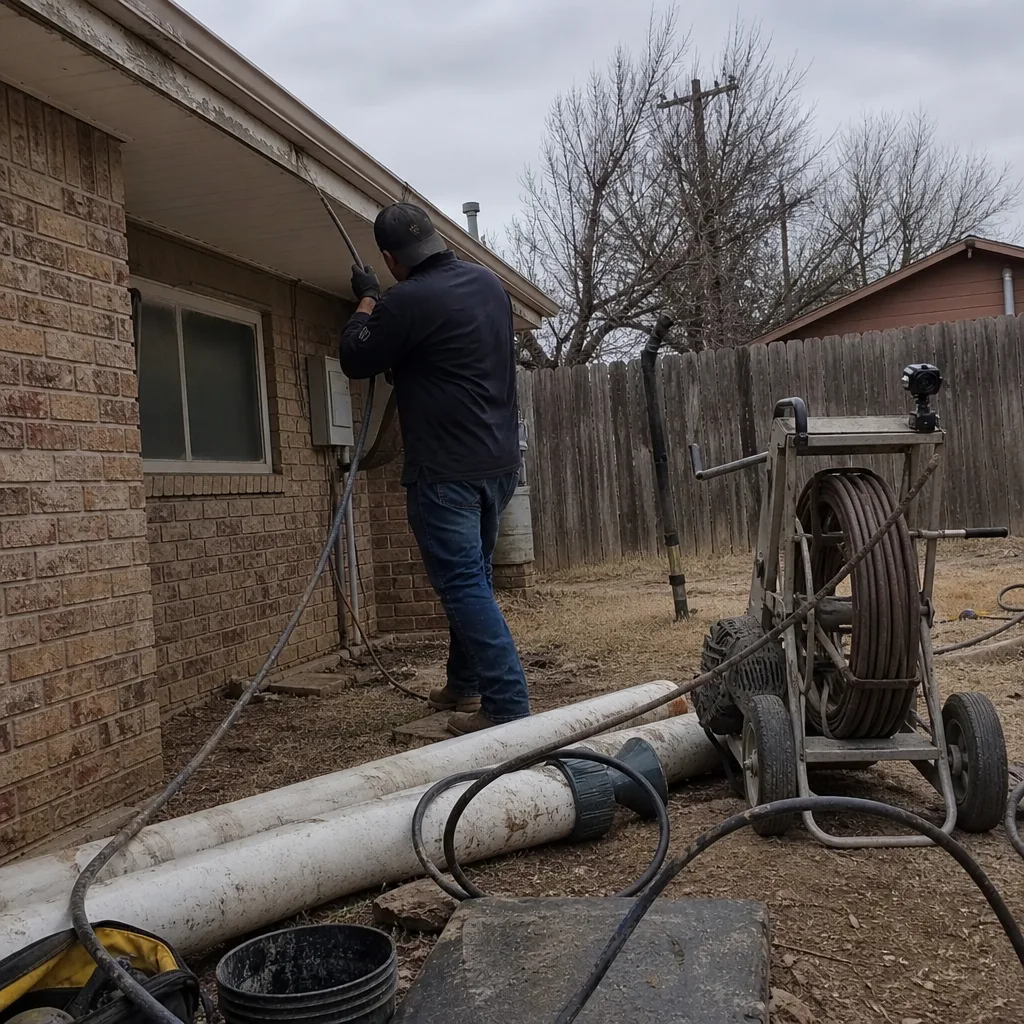 Before
 After
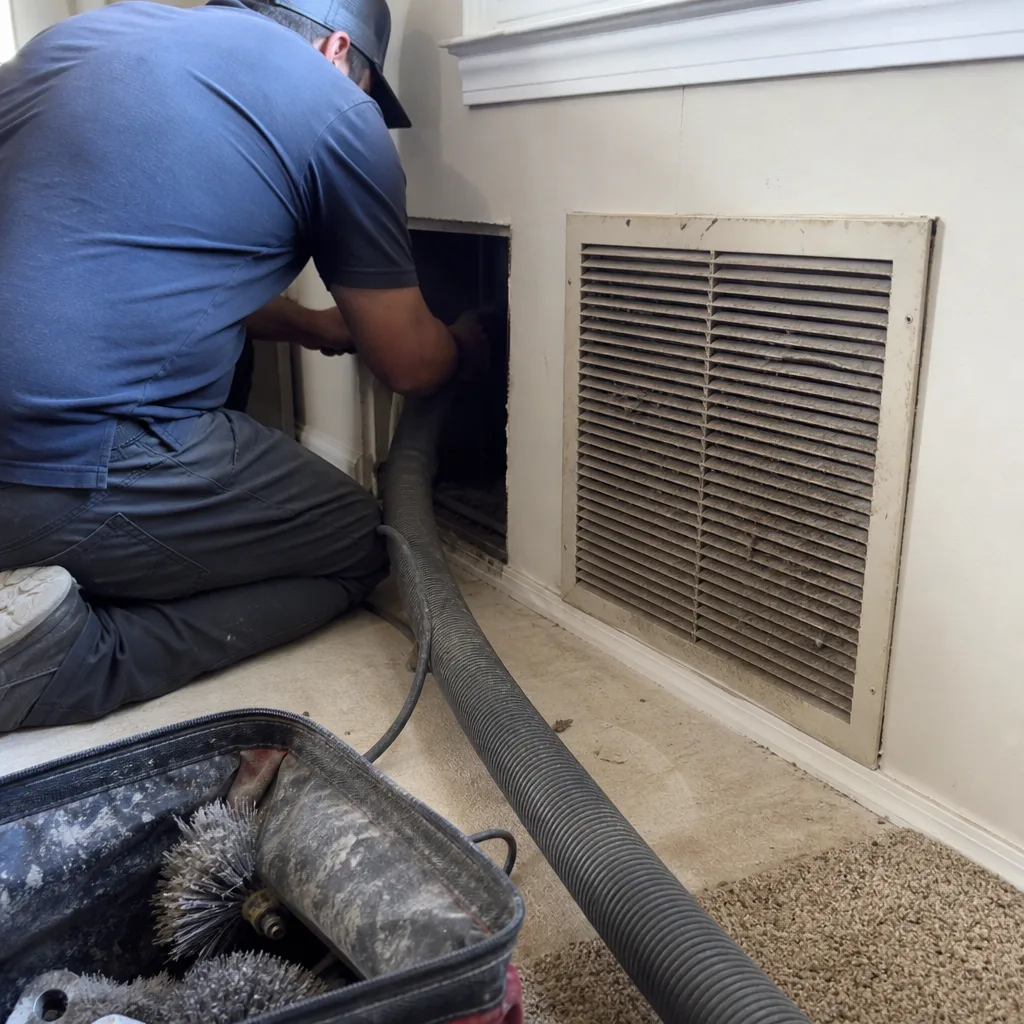 Before
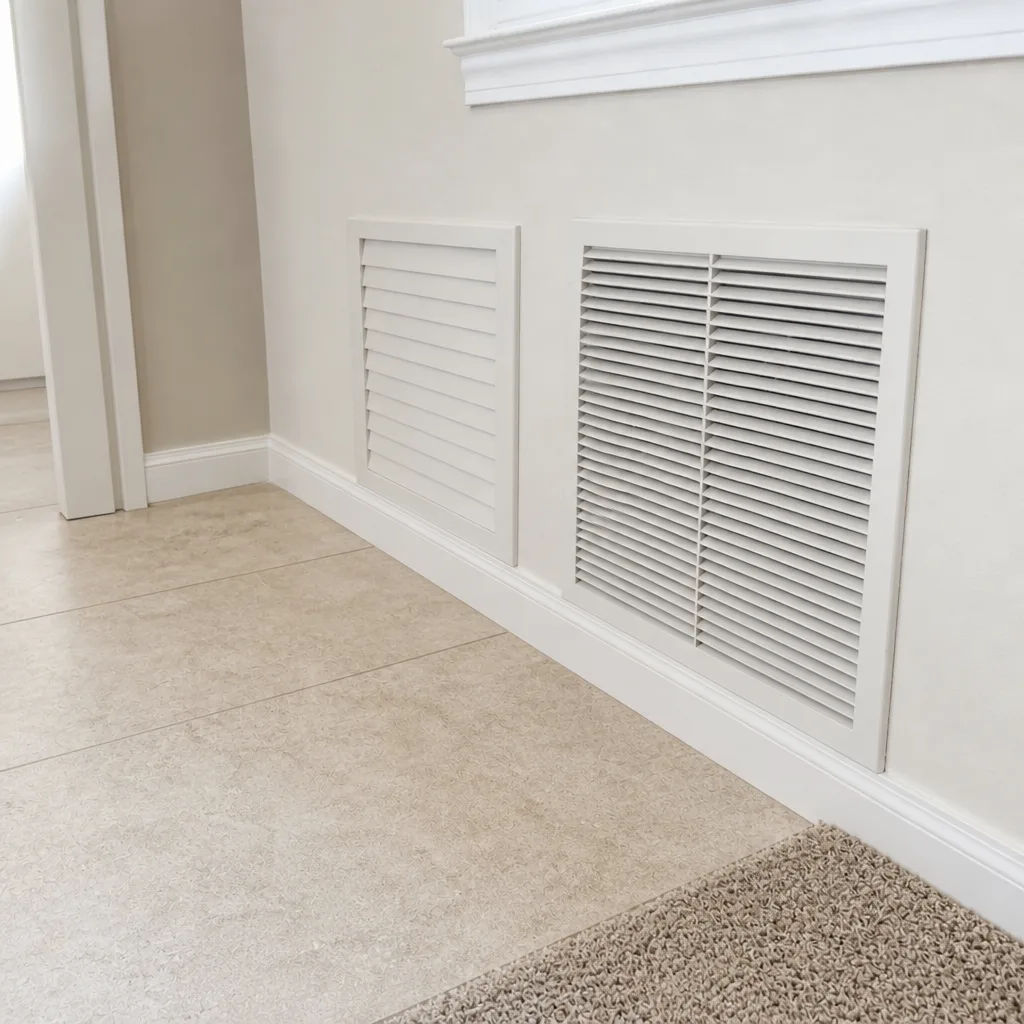 After
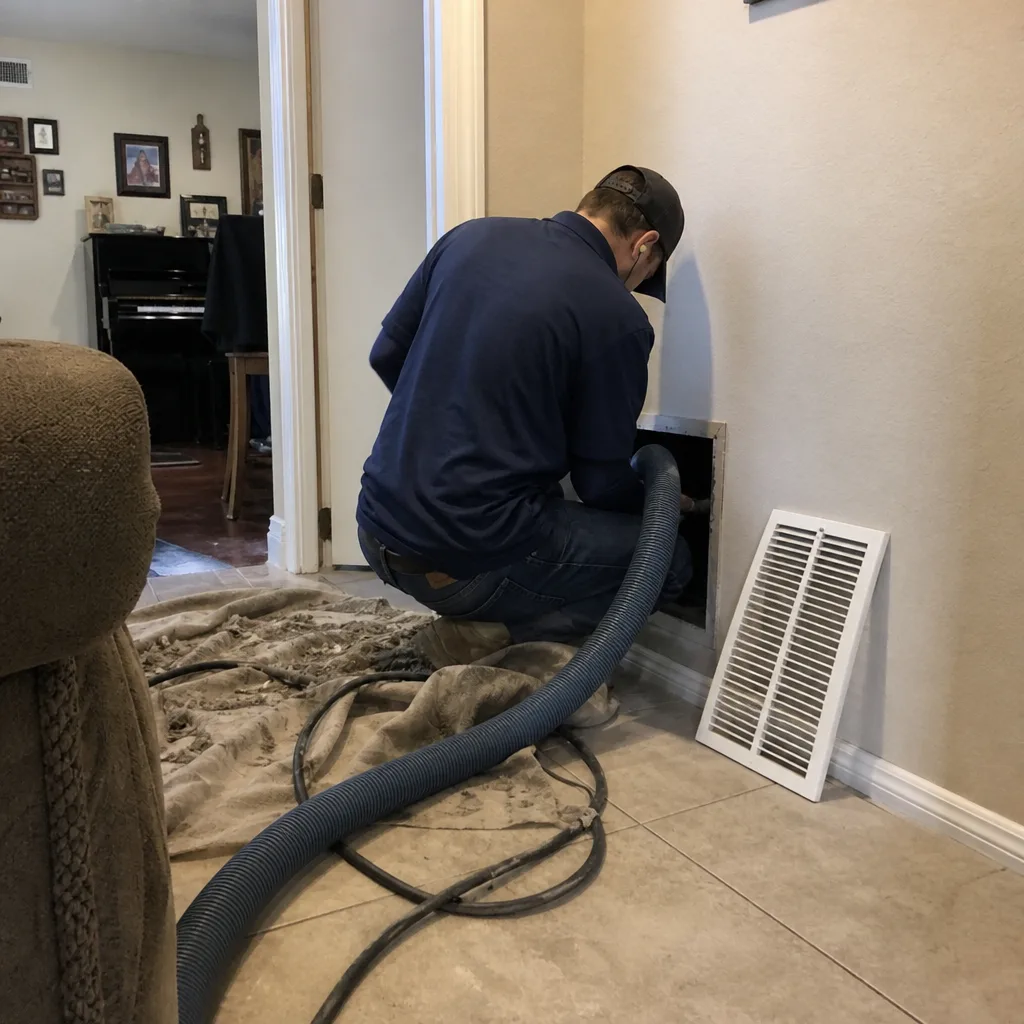 Before
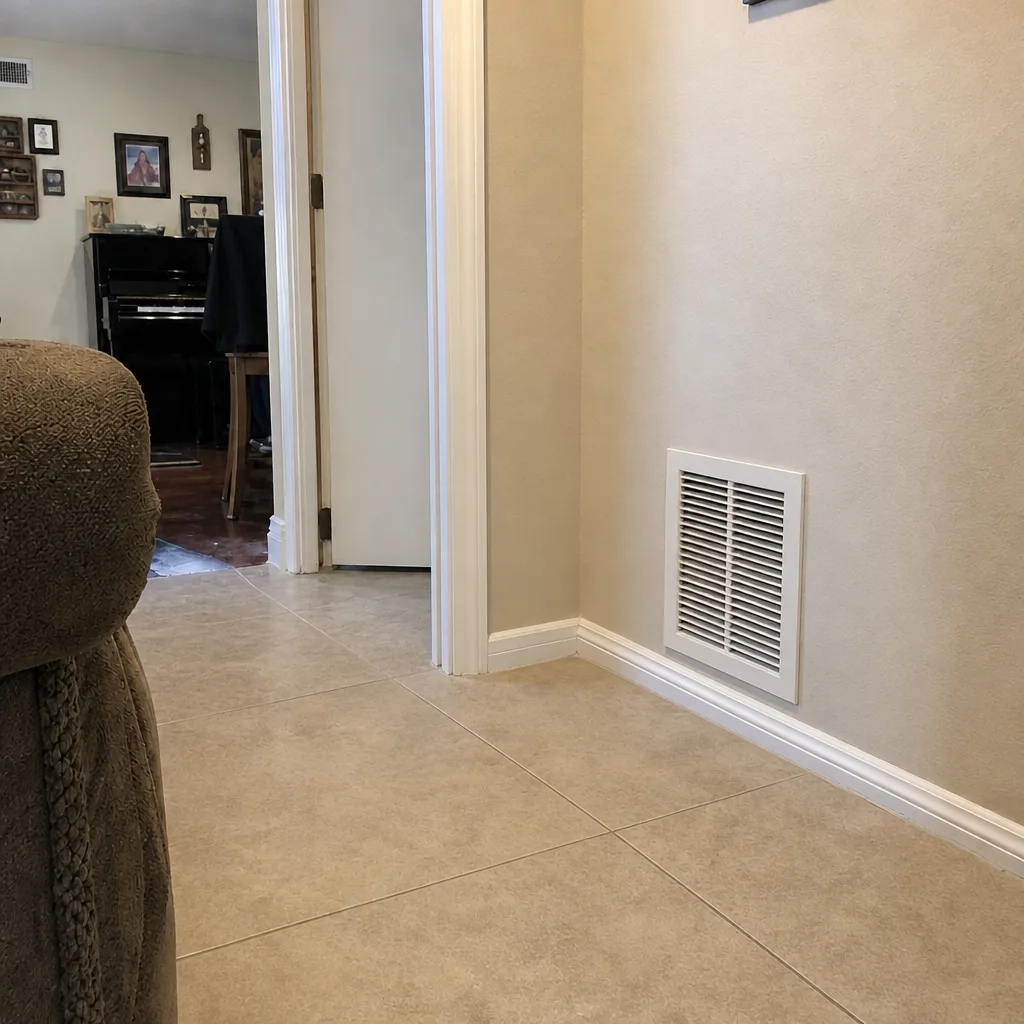 After
When to Call a Professional
Call a professional when the smell persists after surface cleaning, when your smoke test shows air pulling in at a return grille edge, when the same room stays several degrees hotter than the rest, when you’ve finished a renovation and need duct cleaning for construction dust, or when the dryer is taking longer than it should. Those are the scenarios where the symptom is telling you the cause is structural, and the thing paying for itself is a camera inspection, not a brush. Our technicians have up to 9 years of experience with these systems, and we do the repair as well as the cleaning, so a bad joint found mid-visit gets fixed rather than reported. Duct Cleaning Amarillo offers free estimates in Amarillo. Call (866) 389-4505. We answer 24/7. Fast dispatch from 7am to 7pm, Sunday through Friday.
If you’re on the line and want to know what a whole-system price looks like, we’ll explain the range and what the visit includes before you commit. Nothing about the price should be a surprise on the day of the visit.
Frequently Asked Questions
Typical whole-system cleaning in Amarillo ranges from a few hundred dollars upward depending on size, system count, and how much debris is present, and the written estimate sets the final price. We quote per system, not per vent, because a per-vent price can grow with each vent found in the attic. Cleaning and any repair are quoted separately because they’re separate jobs. Call (866) 389-4505 for an exact quote, and estimates are free.
Cheap quotes are usually cheap because the equipment or the scope is smaller, not because the company is more efficient. A shop-vac setup can’t hold what a proper negative-air system does, and a low teaser price often grows once the technician is on-site. Ask what equipment is used, ask for before-and-after photos, and ask what’s included before work starts. A fair price is one that’s set in writing before the visit, and at that point you’re not comparing apples to apples on equipment capability. Call (866) 389-4505 for a free estimate.
You know because you see the before-and-after photos of your own ducts, taken from the camera on the job. That’s the standard we hold to, and any company confident in its work should be able to show you the difference on-screen. Ask before you book, not after, and ask to see the camera during the visit. If a company resists showing you the pictures, that’s your answer.
Most homes don’t need annual cleaning. A reasonable rhythm is every three to five years for a typical household, more often if you have pets, allergies, or have just finished a renovation, and sooner if a camera inspection shows heavy debris. Amarillo’s dusty air speeds up the interval in some homes. The right answer is based on what the ducts actually look like, not on a schedule a company tries to sell you. Call (866) 389-4505 to have yours inspected.
Cleaning fixes weak airflow only if the problem is a blocked or soiled run. If the airflow complaint comes from a collapsed flex duct, a kinked run, or a separated joint in the attic, cleaning won’t fix it and repair will. The camera inspection is what tells you which one you have before you pay for either service. Call (866) 389-4505 for a free estimate and we’ll confirm the diagnosis first.
A house that’s dusty within a week of cleaning almost always has a return-side breach pulling attic air in behind the filter. That’s an air path problem, not a cleaning problem, and it needs the joint resealed. The incense test at your return grilles will show you where the smoke curls toward the gap. If it does, book a camera inspection and repair, not another cleaning. Call (866) 389-4505 and we’ll walk through it with you.
The Bottom Line
Your ductwork is already telling you what’s wrong. A hotter-than-average room points to a leak in the attic run. Persistent dust points to a return-side breach. A musty smell points to moisture at a specific joint. Weak airflow points to a collapsed duct. The job is to read the symptom, then confirm it with a camera before you pay for cleaning or repair. Cleaning fixes what’s inside the duct. Repair fixes what the duct itself is doing. Most homeowners we meet in Amarillo who were disappointed by a cleaning had the second problem, not the first. Get the diagnosis right and the money well-spent.
If you’re in Amarillo and want the diagnosis before the service, call Duct Cleaning Amarillo at (866) 389-4505 for a free estimate. We answer 24/7. Fast dispatch from 7am to 7pm, Sunday through Friday. We’ll walk the system with a camera, show you what we find, and quote cleaning and repair separately so you know what you’re paying for and why.
Written by the team at Duct Cleaning Amarillo.